

 SHARE
SHARE
From crisis to collaboration: reflections on ASEAN’s protection mechanisms for forced migration
| Attachment | Size |
|---|---|
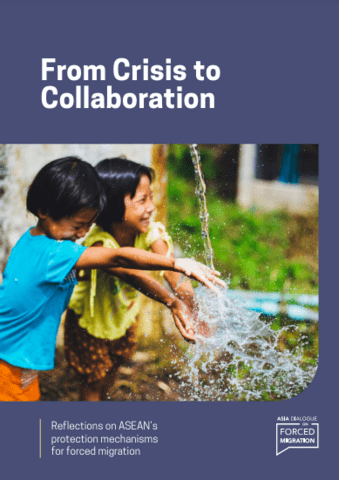
 From crisis to collaboration: reflections on ASEAN’s protection mechanisms for forced migration From crisis to collaboration: reflections on ASEAN’s protection mechanisms for forced migration
|
1.31 MB |
Southeast Asia is home to hundreds of thousands of refugees and asylum seekers, yet it has the lowest rate of acceptance of the Refugee Convention of any region in the world. While some states have established effective refugee policies, many others struggle with implementation, leading to an inconsistent patchwork of rights and protections across and within states.
The lack of a unified protection framework within ASEAN leaves the region unprepared to address crises as they emerge, let alone adequately prepare for them, which regularly results in improvised and inadequate responses to forced migration.
Crises in Myanmar, Afghanistan, and Sri Lanka are likely to cause more widespread displacement, with additional global impacts from ongoing issues in Gaza and Ukraine further complicating the issue. No single country can handle these challenges alone - regional cooperation is crucial.
The report summarises the processes and frameworks that already exist within ASEAN to address forced migration, and provides recommendations on how they can be improved to provide better protection for displaced persons in the region.
The report also shows that, rather than needing to create an entirely new regional architecture, ASEAN already has a number of frameworks that can be built upon in order to better address escalating forced migration crises throughout Southeast Asia and beyond.
