

Southeast Asia
Report
Gender, technology and trafficking in persons: women’s experiences of forced criminality in South‑East Asia’s cyber‑scam centres
Over the past decade, cyber-scam centres dedicated to running online scams at a massive scale have proliferated across areas of South-East Asia. These centres themselves have become sites of significant exploitation. This research sought to understand women and girls’ experiences of trafficking into cyber-scam centres for forced criminality in the South East Asian region.
Report
Co-designing a Living Evidence Architecture
This report presents findings from the Living Evidence Architecture (LEA) project which set out to explore how living evidence systems can better support decision-making across diverse health contexts. The findings from the research paint a picture of living evidence as a catalyst for change technologically, politically and socially.
Report
Assessing the preparedness of emerging economies to defend against cyber-enabled IP theft
This report examines the vulnerability of emerging economies across the Indo-Pacific and Latin America in the face of economic cyber espionage and the degree to which major emerging economies in these regions are prepared to respond. Countries in the study have been assessed and given a risk label indicating their vulnerability.
Report
Building digital resilience: girls and young women demand a safer digital future
This report makes the case that safety in online spaces is a human right as well as a gender equality issue and that ensuring the online safety of children and young people, in all their diversity, is a shared responsibility between governments, policy makers, civil society institutions, parents, guardians, and the wider community at local...
Discussion paper
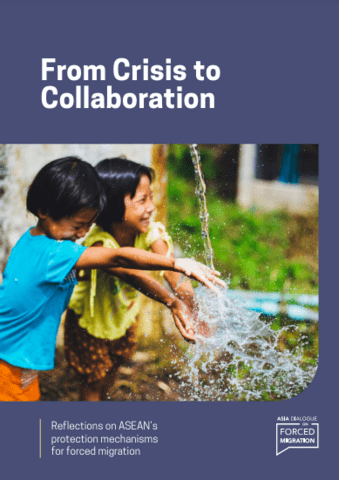
From crisis to collaboration: reflections on ASEAN’s protection mechanisms for forced migration
This report summarises the processes and frameworks that already exist within ASEAN to address forced migration, and provides recommendations on how they can be improved to provide better protection for displaced persons in the region.