

 SHARE
SHARE
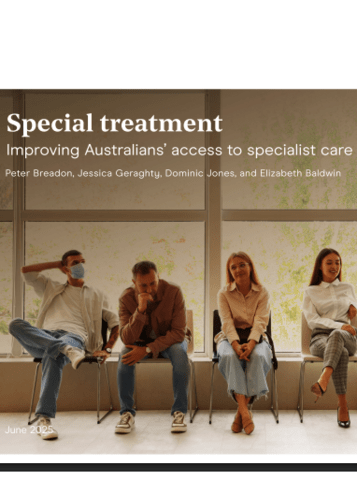
Special treatment: improving Australians’ access to specialist care
| Attachment | Size |
|---|---|
 Special treatment: improving Australians’ access to specialist care Special treatment: improving Australians’ access to specialist care
|
5.84 MB |
|
Special treatment: Chart data
|
3.1 MB |
Millions of Australians face an unenviable choice when they need to see a specialist doctor: pay high fees or wait too long for care.
Patients pay a fee for two thirds of appointments with a specialist doctor, such as a psychiatrist or cardiologist. That’s much more often than for the GP, where only one in five visits costs money.
On average, patients who pay a fee are charged $300 a year. Even poor people can face huge costs. One in 10 low-income patients who are billed pay almost $500 a year. The problem is getting worse: fees have soared by 73 per cent since 2010.
Almost a million people delay or skip specialist care because of the cost. They are risking missed diagnoses and delayed treatment. That leads to avoidable suffering and adds pressure on hospitals.
Public hospitals run free clinics, but they provide just a third of all specialist care, and their wait times are often far too long. In many parts of Australia, wait times for urgent appointments are months longer than clinical guidelines recommend.
This report argues governments must tackle five root problems to improve access to specialist care for all Australians.
Recommendations
- Train the specialists Australia needs.
- Invest in public clinics where they are needed most.
- Modernise public clinics.
- Reduce unnecessary specialist referrals.
- Reduce extreme fees.
