

 SHARE
SHARE
A focus on homes, not power plants, could halve energy bills

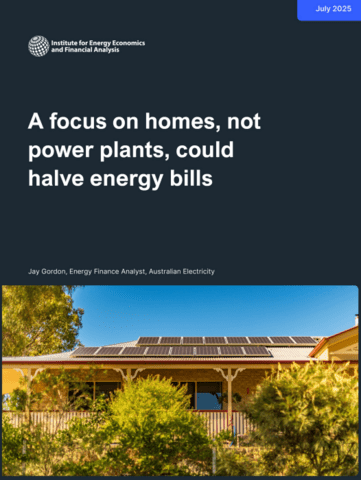
Modelling presented in this report shows focusing on household energy demand is a highly effective strategy to address Australia’s energy challenges. Household solutions such as thermal upgrades, solar and batteries, and smart, efficient electric appliances would save consumers money, while also benefiting the broader energy system by mitigating gas supply gaps, managing peak electricity demand and reducing greenhouse gas emissions.
Many household energy upgrades are cost-effective today. Decision makers must consider the barriers that have historically blocked households from taking up cost-effective energy upgrades, and past experience of policies that have proved to be successful. A combination of improved standards for household appliances, and comprehensive, consistent rebate schemes are likely to drive much higher uptake of upgrades.
Key findings
- Focusing on household solutions such as thermal upgrades, efficient electric appliances, solar, batteries and load-shifting is an effective strategy to halve residential energy bills.
- Household energy upgrades benefit the broader energy system by mitigating gas supply gaps, managing peak electricity demand and reducing greenhouse gas emissions.
- A combination of improved minimum standards for household appliances and more comprehensive incentive schemes would be an effective way to accelerate uptake of household energy upgrades.
- Retail pricing structures and network regulations need to be reviewed to ensure consumers can access the full value of household energy upgrades.
Recommendations
- Federal and state governments should commit to halve household energy bills over the next decade.
- Minimum energy performance standards should be expanded and increased.
- A comprehensive, national incentive scheme for energy upgrades should be implemented.
- Fairer electricity pricing structures should be provided for consumers that offer reasonable rewards for efforts to reduce peak demand.
- A first-principles review of the economic regulation of gas and electricity networks should be undertaken.
