

 SHARE
SHARE
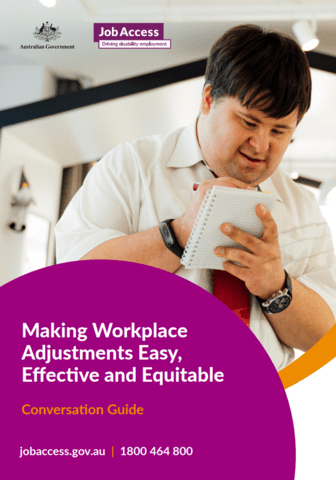
Making workplace adjustments easy, effective and equitable
| Attachment | Size |
|---|---|
 Making workplace adjustments easy, effective and equitable (PDF) Making workplace adjustments easy, effective and equitable (PDF)
|
4.07 MB |
|
Making workplace adjustments easy, effective and equitable (Docx)
|
11.08 MB |
Workplace adjustments (or reasonable adjustments) are administrative, environmental or procedural changes that enable people with disability to have equitable employment opportunities, ensure dignified access and to work safely and effectively. Some examples are flexible work arrangements, facilities, equipment, changes to premises, work practices or training that could help a person do their job equitably and with greater autonomy.
Low awareness about workplace adjustments means employers and employees may be unsure how to ask for or organise adjustments. This guide aims is to help employers and employees approach the conversation from a point of openness, empathy and action.
Not all people with disability require workplace adjustments. However, knowing how to provide adjustments can help employers attract, employ and retain people from a wider talent pool. If an employer is aware of an employee’s disability, they must legally provide what is regarded as a workplace adjustment, to support them at work.
This guide covers:
- sharing information about disability
- good practice considerations for managers
- good practice considerations for employees
- preferred working styles for employers
- preferred working styles for employees
- supports provided by JobAccess including a Disability and Adjustment tool, the application process for workplace adjustments through JobAccess, and the Reasonable Adjustment Policy.
The guide also comes in an audio version.
The guide was updated with minor edits on 28 July 2025.
Getting your workplace ready: making physical workplace adjustments
