

 SHARE
SHARE
Telehealth as a care solution for homebound people

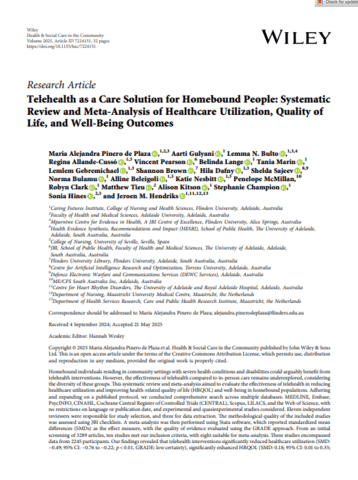
Homebound individuals residing in community settings with severe health conditions and disabilities could arguably benefit from telehealth interventions. However, the effectiveness of telehealth compared to in-person care remains underexplored, considering the diversity of these groups. This systematic review and meta-analysis aimed to evaluate the effectiveness of telehealth in reducing healthcare utilisation and improving health-related quality of life (HRQOL) and wellbeing in homebound populations.
The findings revealed that telehealth interventions significantly reduced healthcare utilisation, significantly enhanced HRQOL and significantly improved wellbeing compared to in-person care. Thus, telehealth emerges as a viable alternative to conventional care, significantly reducing healthcare utilisation and enhancing both HRQOL and wellbeing for homebound people.
These findings underscore the potential of telehealth to mitigate healthcare disparities and emphasise the need for accessible, equitable telehealth services codeveloped with end users and relevant stakeholders to save resources and maximise health outcomes for vulnerable populations in community settings.
Policymakers, researchers and practitioners are encouraged to apply these findings in developing telehealth strategies to address the diverse needs of homebound populations, ensuring quality healthcare services and resource savings through reduced reliance on traditional care models and more emphasis in fundamental care across the life course.
