

Quality of life
Journal article
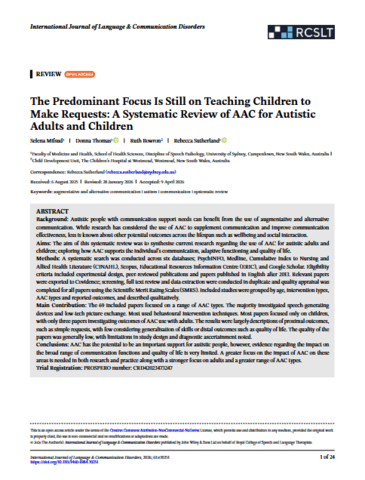
The predominant focus is still on teaching children to make requests: a systematic review of AAC for Autistic adults and children
This systematic review synthesises research on augmentative and alternative communication (AAC) for Autistic adults and children. It explores how AAC supports the individual's communication, adaptive functioning and quality of life. The article calls for more research on the impact on the broad range of communication functions and quality of life, especially among Autistic adults.
Survey Report
State of the older nation 2025
This report reveals the result of a national biennial survey of older Australians. The report reveals that while many older Australians report feeling more positive about their own lives, the data reveals a starkly uneven reality. It finds the stereotype of older Australians as uniformly wealthy is wrong, fuelling ageism that hurts people of all...
Journal article
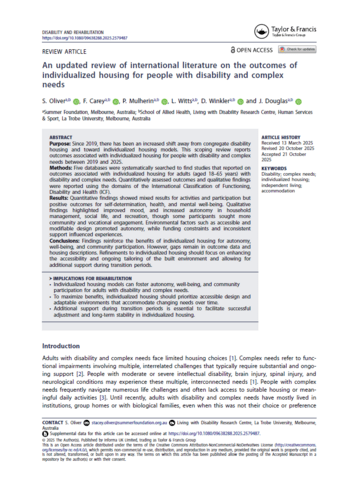
An updated review of international literature on the outcomes of individualised housing for people with disability and complex needs
There has been a growing shift from congregate disability housing toward more individualised housing models. This scoping review examines outcomes for people with disability and complex needs between 2019 and 2025, highlighting the benefits of individualised housing in supporting autonomy, well-being and community participation. However, gaps remain in outcome data and housing descriptions.
Report
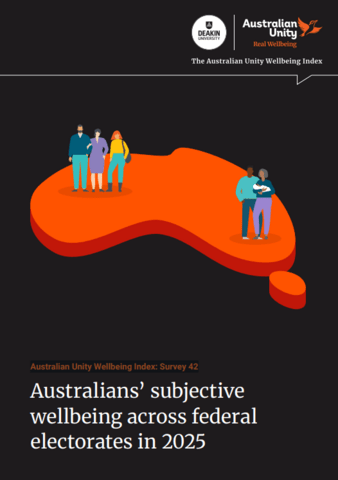
Australians’ subjective wellbeing across federal electorates in 2025
The Australian Unity Wellbeing Index is the nation’s longest-running study of subjective wellbeing. The 2025 survey captured responses from more than 10,000 adults across Australia. The report maps wellbeing across all federal electorates, revealing new insights into how location, income, age and social factors shape Australians’ quality of life.
Journal article
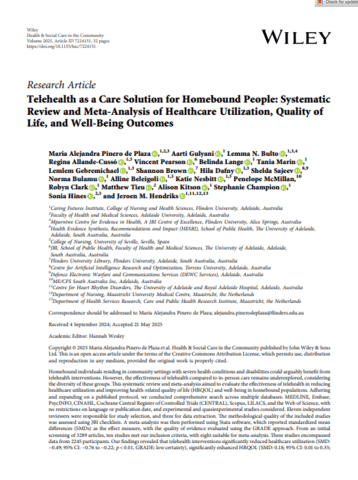
Telehealth as a care solution for homebound people
Homebound individuals residing in community settings with severe health conditions and disabilities could arguably benefit from telehealth interventions. However, the effectiveness of telehealth compared to in-person care remains underexplored. This systematic review aimed to evaluate the effectiveness of telehealth in reducing healthcare utilisation and improving health-related quality of life and wellbeing in homebound populations.