

Organisation
Department of Communities and Justice (NSW)
Owning Institution:
Website:
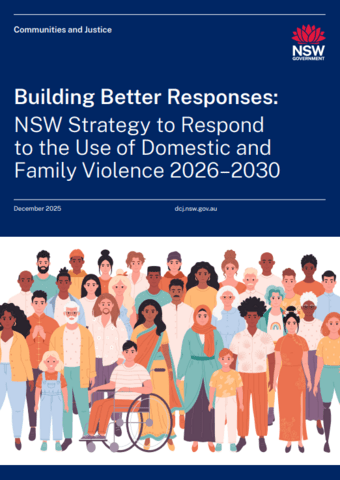
Strategy
Building better responses: NSW strategy to respond to the use of domestic and family violence 2026–2030
A dedicated strategy for New South Wales (NSW) to respond to the use of domestic and family violence and address perpetrator behaviour. The strategy provides a focus on people who use violence. It recognises that tackling key drivers of violence early is one of the most effective ways to break cycles of violence and protect...
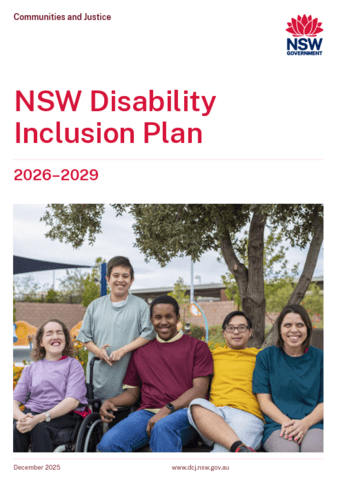
Strategy
NSW disability inclusion plan 2026–2029
This plan to make life better for people with disability sets out 30 key actions the New South Wales (NSW) Government has committed to, as required under the Disability Inclusion Act 2014 (NSW). Structured around four focus areas, the plan ensures accountability and progress toward greater inclusion, accessibility and equity across services and communities.
Report
Review of the operation of doli incapax in NSW for children under 14
An independent review of the operation of doli incapax in New South Wales (NSW) for children under 14. Doli incapax operates as a common law presumption in NSW and presumes children aged between 10 and 13 are not able to be held criminally responsible for their actions. The report makes seven recommendations.

Strategy
Homes for NSW strategy 2025–2035
A 10-year plan to transform the social housing and homelessness system in New South Wales (NSW). It focuses on priority areas of reform to deliver better outcomes for social housing tenants, social housing applicants and people experiencing homelessness. The strategy sets out the vision, ambition, priorities and targets for the plan.

Research Summary
What does ten years of the Pathways of Care Longitudinal Study (POCLS) data tell us about children and young people in out-of-home care in NSW?
This report summarises evidence from the last ten years of the Pathways of Care Longitudinal Study in Australia – a large-scale prospective longitudinal study of children and young people in out-of-home care. It provides a summary of key findings and identifies key implications for policy and practice.