

Organisation
ARC Centre of Excellence for Automated Decision-Making and Society
Owning Institution:
Acronym:
ADMS
Website:
Report
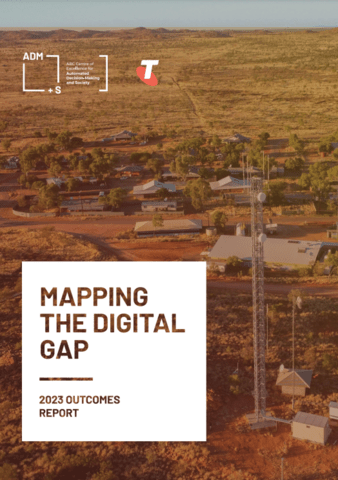
Mapping the digital gap: 2023 outcomes report
The Mapping the Digital Gap project, established through the ARC Centre of Excellence for Automated Decision-Making and Society (ADM+S), in partnership with Telstra in 2021, is the first comprehensive study of remote First Nations communities’ participation in, and access to, the digital economy. This report provides an update on the research conducted to date.
Submission
ADM+S submission to the NDIS Review
Recent developments involving algorithmic technologies have raised concerns over the NDIS and its ability to uphold its promise of personalised support. This submission highlights these concerns, outlines the challenges posed by algorithmic decision-making, and proposes steps towards a more inclusive and equitable NDIS.
Submission
ADM+S submission to the Safe and responsible AI in Australia discussion paper
Nataliya Ilyushina, Jenny Kennedy, Jackie Leach Scully, Dennis Leeftink, Suvradip Maitra, Rita Matulionyte, Anthony McCosker, Robert Mullins, Kelsie Nabben, Christine Parker, Thao Phan, Flora Salim, Aaron Snoswell, Julian Thomas, Melanie Trezise, Libby Young, Jacky Zeng
This submission from the ARC Centre of Excellence for Automated Decision-Making and Society seeks to distil what is (arguably) new and/or different about recent developments in automated decision-making (ADM) and AI technologies, and their legal, social, human and environmental impacts.
Report
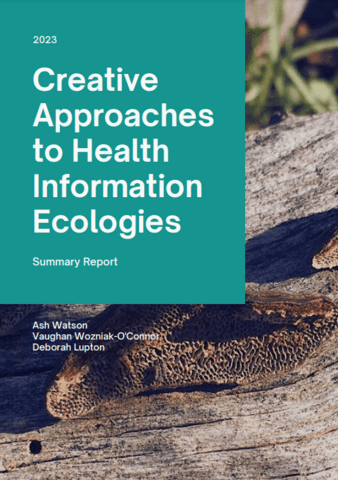
Creative approaches to health information ecologies
This report shares findings from the project 'Creative Approaches to Health Information Ecologies' - which explored the many different ways that people learn about their bodies and health. This included their use of digital technologies, as well as their encounters with other people and the world around them.

Report
Digital and data capabilities for sexual health policy and practice: stage one report
New digital and data practices present significant challenges for the fields of sexual health promotion and sexual healthcare provision. This report introduces new models for digital and data capabilities in sexual health policy and practice.