

Culturally and Linguistically Diverse (CALD)
Alternative labels
Culturally and linguistically diverse
Non-English speaking background
NESB
Report
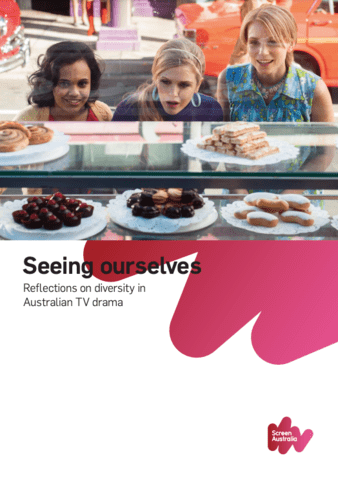
Seeing ourselves: reflections on diversity in Australian TV drama
Screen Australia has released the most significant study of diversity on Australian screens since television began in 1956.
Report
Giving and volunteering in culturally and linguistically diverse and Indigenous communities: final report
The Department of Social Services commissioned this research report to better understand volunteering and giving within culturally and linguistically diverse (CALD) and Indigenous communities.
Report
Not there yet: an investigation into the participation of students of refugee backgrounds in the Australian higher education system
As a signatory to the United Nations 1951 International Convention on Refugees, Australia continues to accept significant numbers of Humanitarian refugees on an annual basis. Recent global developments in terms of conflict in many countries have exacerbated the issue of ‘forced migration’, with estimates indicating that up to sixty million displaced people are seeking refuge...
Report
A platform for action
This report reflects key insights provided by participants at the roundtable as a platform for action by governments, business, communities and individuals. It also provides input to the Council of Australian Government’s agenda to reduce violence against women and their children. The roundtable was held in Sydney on 7 August 2015 and was an initiative...
Report
Investigating the relationship between equity and graduate outcomes in Australia
Australian higher education equity policy focusses mostly on access and participation with the implicit assumption that disadvantage will be ameliorated through educational achievement. Less is known as to whether patterns of disadvantage continue post-completion. In a context in which graduate employability is becoming an important yardstick against which to measure institutional effectiveness, this questions is...