

Monetary policy
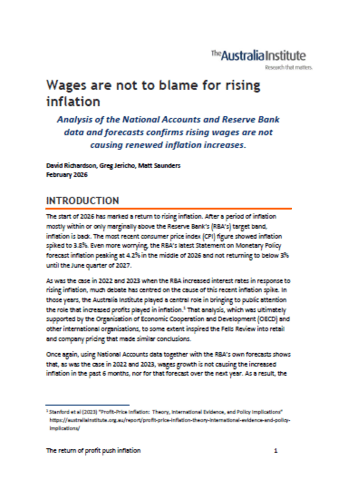
Briefing paper
Wages are not to blame for rising inflation
A detailed examination of data from the Reserve Bank of Australia (RBA) and Australia’s National Accounts reveals that wage growth is not responsible for the recent uptick in inflation. It concludes that the RBA’s latest interest rate hike fails to address the bigger driver of inflation – surging company profits – but it blames the...
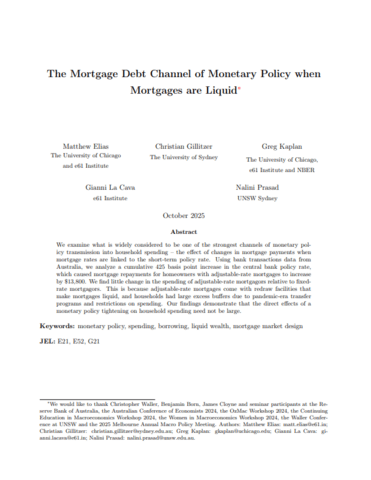
Working paper
The mortgage debt channel of monetary policy when mortgages are liquid
Australians hold some of the highest levels of mortgage debt in the world. This paper examines what is widely considered to be one of the strongest channels of monetary policy transmission into household spending – the effect of changes in mortgage payments when mortgage rates are linked to the short-term policy rate.
Report
OECD economic outlook: interim report
The report assesses the global economic situation finding the global economy remained resilient in 2024. The report outlines recent developments, projections, risks and challenges, and policy requirements. It finds that inflationary pressures continue to linger in many economies and further fragmentation of the global economy is a key concern.
Report
OECD economic outlook
The report assesses the global economic situation finding it remains resilient despite recent shocks such as the pandemic and energy crisis. The report recommends policymakers consolidate public finances, continue monetary policy easing, and address structural labour shortages to support economic growth and living standards.
Discussion paper
How do households form inflation and wage expectations?
This paper explores the formation of households’ wage and inflation expectations in order to better understand the role they play in monetary policymaking and the macroeconomy. It finds that households associate high wage growth with good economic outcomes and high inflation with bad ones, suggesting little trade-off between reducing inflation and economic activity.