

Work insecurity
Alternative labels
Non-traditional work arrangements
Job instability
Patchwork economy
Alternative work
Contingent work
Insecure work
Informal work
Precarious employment
Microwork
Report
Salvation in a start-up? The origins and nature of the self-employment boom
The UK is experiencing a boom in microbusinesses and self-employment. Today there are 600,000 more microbusinesses (firms with zero to nine employees) in existence than there were when the recession first began in 2008, and 40 percent more than at the turn of the century. Likewise, the number of people working for themselves has increased...
Report
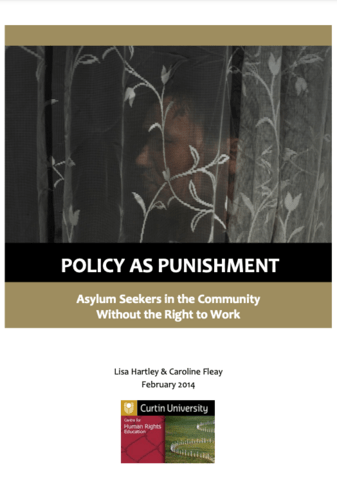
Policy as punishment: asylum seekers in the community without the right to work
This research paper outlines the experiences of asylum seekers who arrived to Australia by boat and are living in the Australian community without the right to work and with only minimal financial support.

Essay
Precarious work: the need for a new policy framework
Former NZ Attorney General and Labour Minister, Professor Margaret Wilson, has written a detailed account of the rise of precarious work arrangements in Australia and New Zealand in this paper.
Report
An unhealthy obsession: the impact of work hours and workplace culture on Australia's health
Australians work some of the longest hours in the developed world – substantially longer than their counterparts in Denmark, The Netherlands and Norway. For many Australians though, work stress is related not to the number of hours worked, but a mismatch between the workers’ desired and actual hours of work, and the inflexibility of these...
Report
Lives on hold: unlocking the potential of Australia's workforce
The last two decades in Australia has seen a dramatic decline in permanent work, and corresponding growth of insecure forms of employment, such as casual, contract work and labour hire. The full extent and impact of this shift on workers, their families and the Australian community has never been formally investigated.