

Cultural safety
Alternative labels
Cultural competency
Description
A policy of ensuring respect for cultural and social differences in the provision of services.
Cultural safety demands actions that recognise, respect and nurture the unique cultural identity of a person and safely meets their needs, expectations and rights. (SafeWork NSW).
Guide
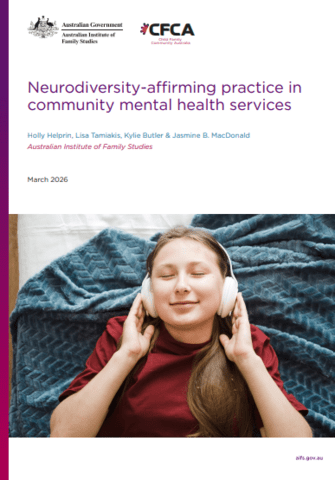
Neurodiversity-affirming practice in community mental health services
This practice guide presents a framework for family and community services to apply neurodiversity-affirming practice (NAP) to their work with all children, young people and families. NAP is a way of working that aims to provide a safe and supportive service environment that accepts, understands and values neurodiversity.
Report
A fair retirement: removing barriers in super for First Nations peoples
The super system in Australia was not designed with the unique experiences and needs of many First Nations people. This report shares examples of good practices by super funds to meet the needs of Aboriginal and Torres Strait Islander people and makes recommendations for further improvements to deliver a fairer experience for First Nations members.
Strategy
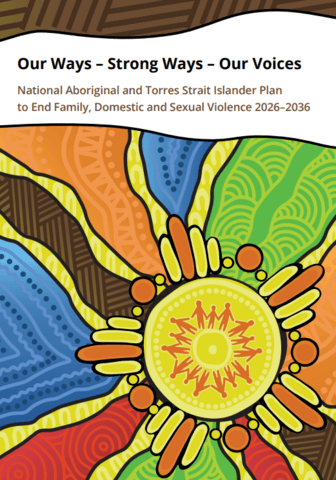
Our ways – strong ways – our voices: national Aboriginal and Torres Strait Islander plan to end family, domestic and sexual violence 2026–2036
A 10-year national strategy that will guide actions towards ending violence against Aboriginal and Torres Strait Islander women and children. The plan is grounded in culture and lived experiences. Woven throughout the plan are eight principles that underpin change based on self‑determination, truth-telling, lived experience, healing, systemic transformation, intersectionality, accountability and Indigenous data sovereignty.
Journal article
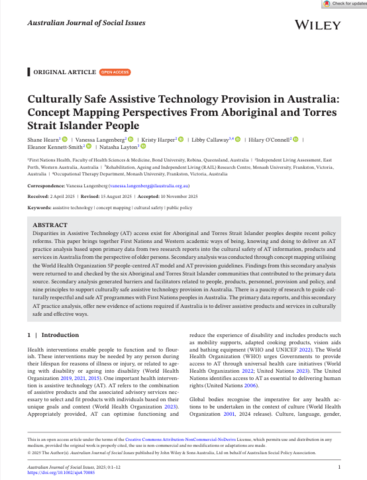
Culturally safe assistive technology provision in Australia
This study explores inequities in Assistive Technology (AT) access for Aboriginal and Torres Strait Islander peoples. Secondary analysis identified barriers and facilitators across people, products, personnel, provision and policy, generating nine principles for culturally safe AT delivery. The findings highlight actions needed for respectful and effective AT programs.
Guide
Creating structural change through shared decision-making: guidance for government and Aboriginal and Torres Strait Islander organisations
Drawing on real-world case studies and examples of effective shared decision-making, the guidance helps both governments and Aboriginal and Torres Strait Islander organisations learn from and scale proven approaches to shared decision-making. It includes readiness assessments, templates and step-by-step tools that guide both parties to work together in genuine, culturally safe and accountable ways.