

Vision impairment
Alternative labels
People with a vision impairment
Vision disorder

Guide
An eye to the future: unlocking the potential of employing people who are blind or vision impaired
A guide to understanding how to confidently recruit, support and retain employees who are blind or vision impaired. It offers practical advice, real-world insights and easy-to-follow steps to help employers remove barriers and embrace inclusive practices – from recruitment and onboarding to accessible technology and legal considerations.
Journal article
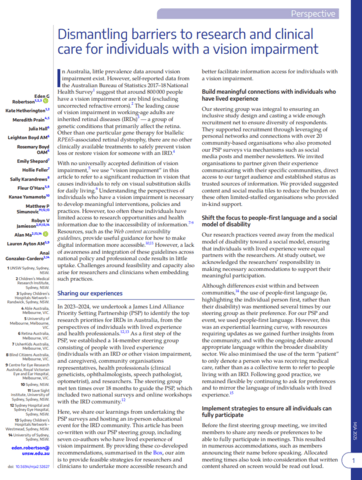
Dismantling barriers to research and clinical care for individuals with a vision impairment
This paper shares learnings from research and co-design activities undertaken to identify research priorities for people with a vision impairment. It outlines practical strategies for researchers and clinicians to undertake accessible research and better facilitate information access for individuals with a vision impairment.
Report
Inclusive juries — access for people who are deaf, hard of hearing, blind or have low vision: report
This report recommends ways to remove barriers from current law and practice that prevent Victorians who are deaf, hard of hearing, blind or have low vision, from serving as jurors.

Discussion paper
Inclusive juries – access for people who are deaf, hard of hearing, blind or have low vision: consultation paper
The Victorian Law Reform Commission has released this consultation paper as part of their consideration over what changes to legislation and practices should be made to enhance access for people who are deaf, hard of hearing, blind or have low vision who wish to serve as jurors in Victoria.
Report
Smartphones and equal access for people who are blind or have low vision
This research report finds that that while around 80 per cent of the country’s blind and low vision community own a smartphone, many users are finding limitations with the technology, such as general features being inaccessible or unaccommodating.