

Government schools
Alternative labels
State schools
Discussion paper
Australia’s private high school problem: unequal, expensive and falling behind
Australia has one of the world’s most privatised high school systems. This paper reveals that Australia is the most expensive place in the developed world for families to send a child to high school. It finds there is no evidence that the significant expense of privatised school education has boosted Australia’s education performance.
Report
Invisible labour: principals’ emotional labour in volatile times
The report investigates the rising violence in Australian schools and its profound impact on the emotional labour of public school principals. It calls for a whole-of-government response that recognises emotional labour as central to educational leadership and prioritises the safety, wellbeing and sustainability of Australia’s public school principals. Recommendations are provided at macro and micro...

Report
Investing in Australia’s future 2025
The report outlines the urgent reforms and targeted investments needed to ensure children in Australian public schools can thrive. It provides a roadmap for how governments can deliver on the goals of the Better and Fairer Schools Agreement (2025–2034). Key issues identified include rising student needs, teacher shortages and equity gaps.
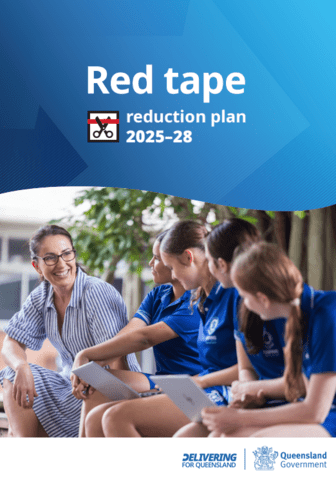
Strategy
Red tape reduction plan 2025–28
The plan outlines the approach to cutting through the red tape impacting teachers and school leaders in Queensland Government schools across years K–12. It comprises a series of targeted actions, organised under nine overarching commitments. The nine commitments represent a framework for immediate action while providing scope to address new and emerging issues as they...
Report
New schools agreements show public schools will remain underfunded in 2034
An analysis of The Better and Fairer Schools Agreement - Full and Fair Funding 2025-2034 between the Australian Commonwealth and state and territory governments finds that public schools will still be underfunded in 2034. The paper outlines the reasons for the continued underfunding and calls for the agreements to be revised.