

Child development
Report
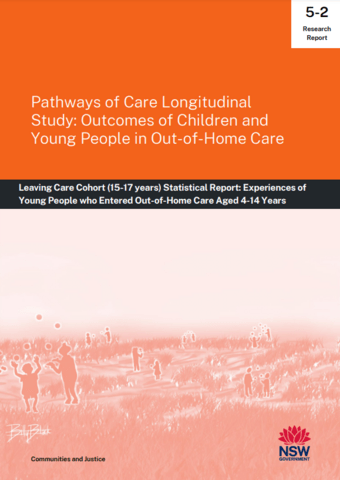
Leaving care cohort (15-17 years) statistical report: experiences of young people who entered out-of-home care aged 4-14 years
This report focuses on a cohort of young people in out-of-home care (OOHC) who were aged 15-17 years at the time of their interview and describes the experiences of young people who entered OOHC when they were 4-14 years old. It focuses on the demographic characteristics, socio-emotional wellbeing, social competence, verbal ability, non-verbal reasoning and...
Report
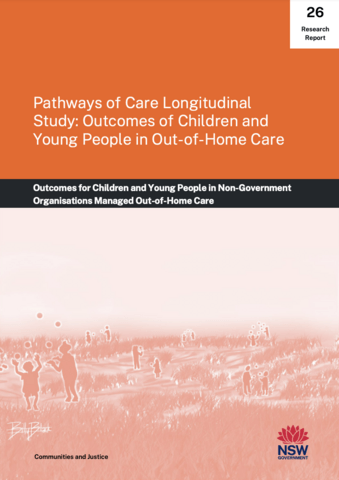
Outcomes for children and young people in non-government organisations managed out-of-home care
This paper presents findings from the first large-scale prospective longitudinal study of children and young people in out-of-home care (OOHC) in Australia, comparing the socio-emotional outcomes of government- and non-government-managed care. It notes a range of factors that influence wellbeing but finds no evidence that the case management provider has a significant impact.
Report
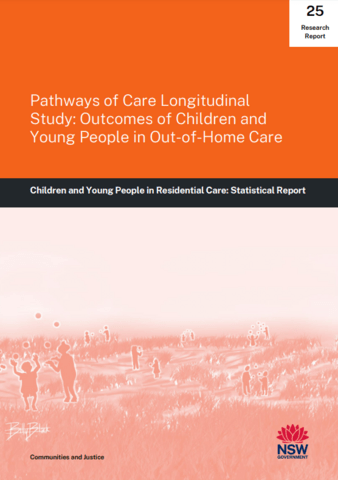
Children and young people in residential care: statistical report
This report focuses on a cohort of children and young people in OOHC who were in residential care at the time of the study. It focuses on the demographic characteristics, socio-emotional wellbeing, social competence, verbal ability, non-verbal reasoning and the perspectives of the children and young people in residential care.
Journal article
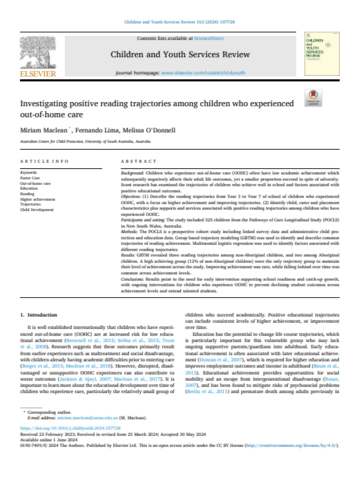
Investigating positive reading trajectories among children who experienced out-of-home care
Children who experience out-of-home care often have low academic achievement which subsequently negatively affects their adult life outcomes, yet a smaller proportion succeed in spite of adversity. This study examined the reading trajectories of children from the Pathways of Care Longitudinal Study in New South Wales, Australia.
Literature review
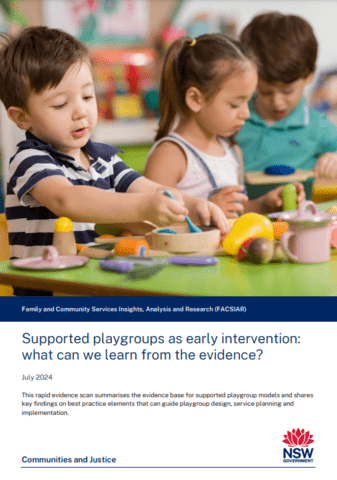
Supported playgroups as early intervention: what can we learn from the evidence?
This report summarises the findings from a rapid evidence scan that explored the evidence base for supported playgroup models. The evidence base for supported playgroup models is emerging. The few quantitative evaluations available provide some evidence that supported playgroups can improve child outcomes, including language, cognition, behaviour, socialisation, transition to school; and parent outcomes, including...