

Artificial Intelligence (AI)
Alternative labels
Generative AI (GenAI)
Report
Digital lives of Australians 2025
This research report provides insight into the online experiences of Australian consumers and small businesses, highlighting how their behaviours, views on and experiences with the internet have evolved against a backdrop of technological change. Despite many changes, the internet continues to be relied on and valued by the vast majority of Australians.
Briefing paper
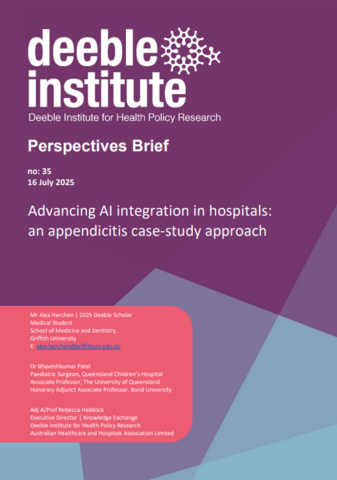
Advancing AI integration in hospitals: an appendicitis case-study approach
Artificial intelligence (AI) is transforming healthcare with a promise to improve clinical decision-making, patient outcomes and hospital systems’ efficiency. Yet, challenges related to patient safety and model bias, validation and integration into existing systems remain. This brief offers specific actions that will contribute to a national strategy to develop an AI ecosystem suited to Australia’s...
Briefing paper
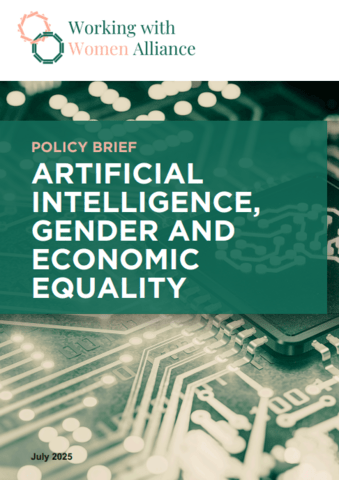
Artificial Intelligence, gender and economic equality
This policy brief examines how the widespread adoption of artificial intelligence (AI) and large language models is amplifying risks to women’s economic equality in Australia. Drawing on recent evidence from employment, financial and housing sectors, this report provides gender-responsive recommendations for regulation and oversight. It offers targeted strategies to ensure that the benefits of AI...
Guide
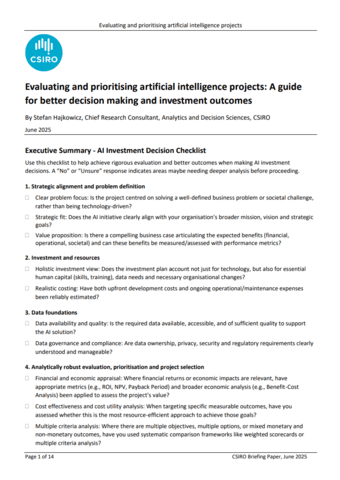
Evaluating and prioritising artificial intelligence projects
Artificial intelligence (AI) has transformative potential, but only when applied to the right problem, with the right planning. Global AI investment is projected to reach AU$980 billion annually by 2028, yet 80% of today’s AI projects fail. This is a practical resource to help decision makers identify AI projects that are more likely to succeed...

Guide
How to build a pro-integrity culture in public sector organisations
Eight guides to build a pro-integrity culture and corruption-resistant practices in the public sector. From risks associated with procurement and major projects, to ethical leadership and the emergence of artificial intelligence – each guide focuses on an area where corrupt conduct can potentially arise and how to build processes that identify risks early.