

Ecosystems
Alternative labels
Biomes
Biotic communities
Ecology
Report
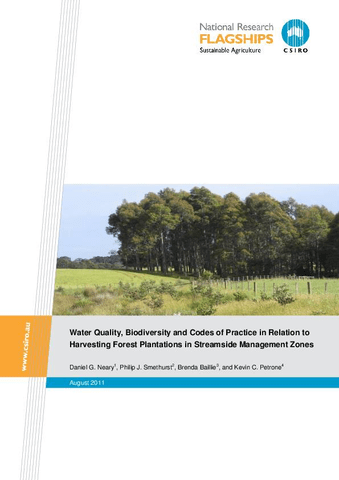
Water quality, biodiversity and codes of practice in relation to harvesting forest plantations in streamside management zones
This report examines important streamside management zone processes and illustrates them with examples from forest management operations and agriculture. Streamside management zones (SMZs) are special landscape units that include riparian areas and adjacent lands that mitigate the movement of sediment, nutrients and other chemicals from upland forest and agricultural management areas into streams. The size...
Report
Scenario planning for Melbourne's peri-urban region
Peri-urban areas form belts of non-urban land fringing metropolitan centres. They usually contain important natural resources, remnant biodiversity and significant landscapes. These areas are under increasing worldwide threat from development and overuse. RMIT Peri-urban region research examines characteristics of peri-urban regions and impacts of settlement patterns and other drivers of change on land use, vegetation...
Report
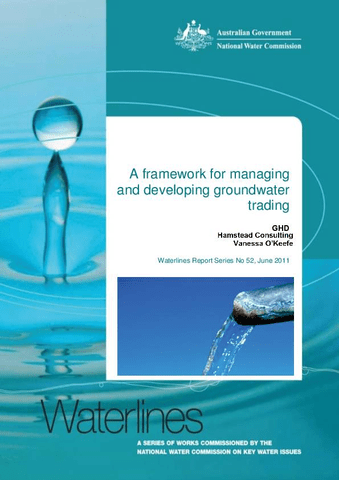
A framework for managing and developing groundwater trading
In many areas of Australia, demand for groundwater now exceeds sustainable supply rates. Groundwater trading aims to encourage the efficient allocation of scarce water access between competing users. This report sets out a management framework for groundwater trading that provides a structure to establish or develop groundwater markets in a range of situations. It builds...

Report
Australian water markets: trends and drivers, 2007-08 to 2009-10
The annual Australian water markets reports provide statistics that summarise activity in Australian water markets, together with information on water market structures. The aim of this synthesis report is to analyse trends in market activity (how much water is being traded and where), as well as the drivers influencing market outcomes (why is water being...
Report
Strengthening Australia's water markets
The development of Australia's water markets represents a centrepiece of national water reform. Trade in various water products has grown substantially in recent years, with the combined value of markets estimated to be $3 billion in 2009-10. Water markets provide an example of successful national micro-economic reform, ensuring that scarce water resources are most effectively...