

Secondary education
Alternative labels
Secondary schools
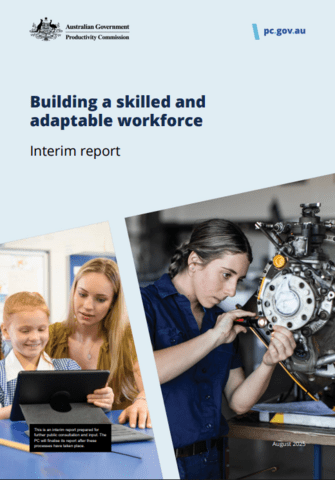
Report
Building a skilled and adaptable workforce: interim report
This interim report proposes that better support for Australians to transition through education and work are key to a stronger economy. It presents draft recommendations focused on three key policy reform areas: the best resources to improve school student outcomes, building skills and qualifications for a more productive workforce, and fit-for-purpose occupational entry regulations.
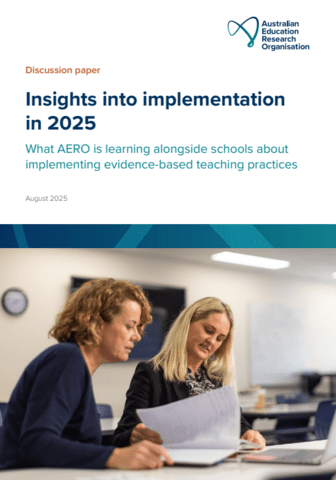
Discussion paper
Insights into implementation in 2025
The Australian Education Research Organisation (AERO) has been working closely with Australian schools and systems to learn about promising approaches for implementing evidence-based teaching practices in different school contexts. This discussion paper provides detailed insights from the second year of the Learning Partner work.
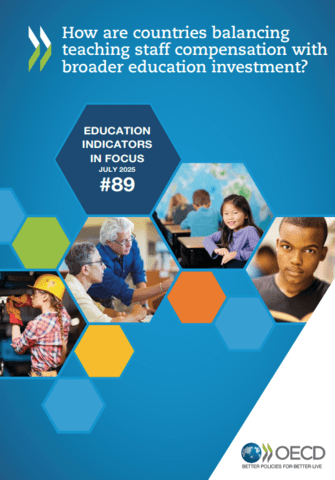
Briefing paper
How are countries balancing teaching staff compensation with broader education investment?
Teachers’ salaries consistently represent the largest spending item in public primary and secondary educational institutions across OECD countries and are often the subject of debate. This policy brief outlines spending patterns across OECD countries, highlighting the complexity of implementing broad salary reforms. It finds that even modest salary increases for teachers can have a significant...
Report
NAPLAN 2025: national results commentaries
The commentaries highlight Years 3, 5, 7 and 9 NAPLAN results for 2025, nationally and by selected subgroups. Girls continue to outperform boys in literacy and boys continue to outperform girls in numeracy at all year levels. Higher levels of parental education and occupation continue to be associated with higher NAPLAN performance in all domains.
Report
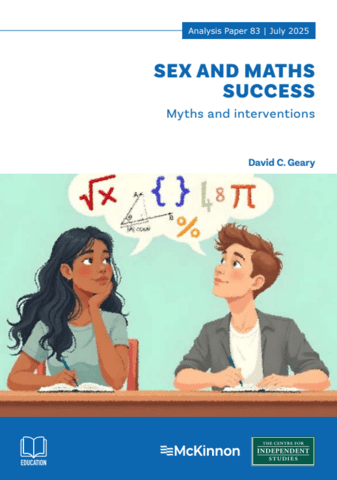
Sex and maths success: myths and interventions
This report outlines sex differences in mathematics outcomes in primary and secondary school education. It looks into spatial competency, non-cognitive contributors and in-class attentive behaviour on these sex differences. The implications and interventions are examined, including Science, Technology, Engineering and Mathematics (STEM) policies for the future.