

Political influence
Submission
ADM+S submission to the Senate Select Committee on Information Integrity on Climate Change and Energy
This submission to the Senate Committee on Information Integrity on Climate Change and Energy draws on research conducted ahead of the 2025 Australian Federal Election to track political advertising in key electorates. The research revealed that astroturfing in climate and energy debates is not the work of fringe actors but a systematic strategy of mainstream...

Position paper
A seat at the table: embedding transparency, integrity, and equality into the federal lobbying regime
This paper examines the central shortcomings of the Australian regime for regulating lobbying and proposes comprehensive reform to address them. It calls on the federal government to work towards re-building trust with the public by prioritising transparency, integrity and equality in lobbying. The paper proposes comprehensive legislative reform is urgently recommended. It provides 15 recommendations.

Report
Corporate influence in competition policymaking
This report focuses on corporate influence in competition policy, highlighting the benefits of legitimate corporate engagement, the risks when influence becomes undue and the challenges in distinguishing between the two. It outlines responses available to policymakers to help them minimise the risk of undue influence including transparency frameworks, prohibition policies and institutional integrity responses.
Discussion paper
Declining legacy media influence on Australian elections
This paper explores the declining influence of media endorsements and leaders' debates on election outcomes. It finds that the opinions and endorsements published by Australia’s major media outlets now have little influence over how Australians actually vote. The paper proposes that governments should no longer fear retribution from media organisations opposed to important reforms.
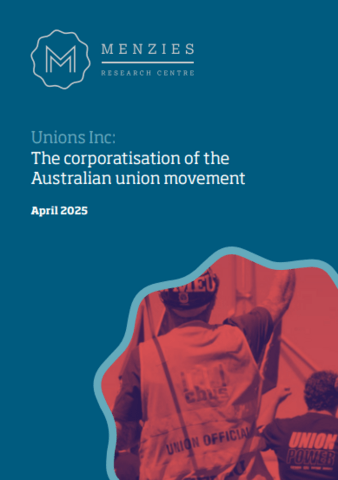
Report
Unions Inc: the corporatisation of the Australian union movement
This report finds that the modern-day union movement has become a self-serving, complex commercial network that has monetised the industrial relations system to extract financial and political benefits. It provides recommendations to protect members’ interests over those of union profiteers with proposed measures to enhance transparency, curb conflicts of interest and restore trust.