

Sustainable economics
Report
Supporting a healthy and productive nation
Australia needs to modernise its health and care system to make it more sustainable, reduce cost pressures by embracing technology, lift productivity and deliver higher standards of care for all generations, according to this report. The report provides a blueprint outlining the essential steps to be taken now to ensure a healthier, more productive nation.
Briefing paper
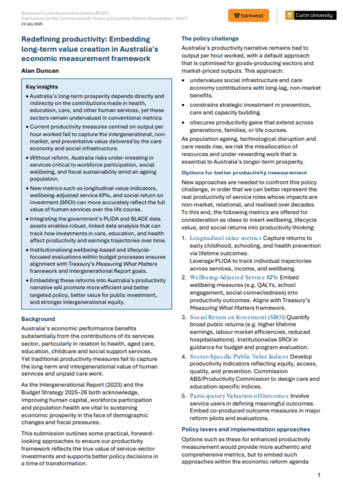
Redefining productivity: embedding long-term value creation in Australia’s economic measurement framework
Moving to a more authentic and comprehensive measure of productivity means recognising that not all value is immediate, monetised or measurable in output per hour terms. This paper outlines some practical, forward-looking approaches to ensure Australia's productivity framework reflects the true value of service-sector investments and supports better policy decisions in a time of transformation.
Briefing paper
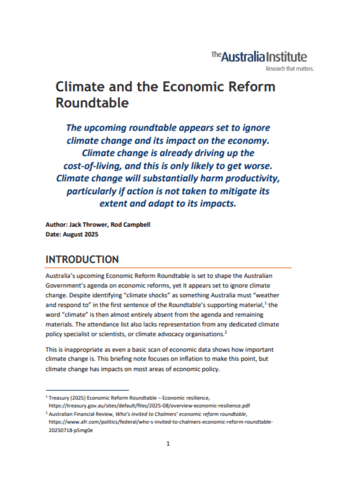
Climate and the Economic Reform Roundtable
This paper underlines the impact of climate change on the economy and productivity ahead of the upcoming Australian Government's Economic Reform Roundtable. It finds that climate change and productivity are inextricably linked, concluding that any genuine economic plan for the future would be incomplete without taking into account the impact of climate change.
Report
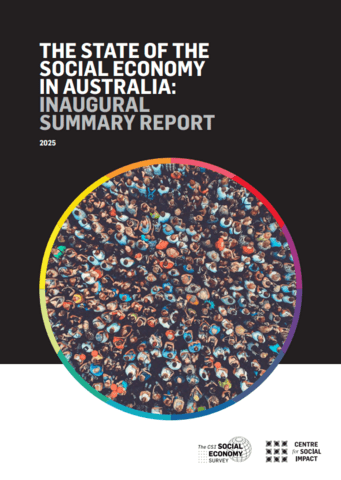
The state of the social economy in Australia
A world where economies are measured by the extent to which they generate positive social and environmental outcomes is being shaped around the globe by the social economy. This first comprehensive research into Australia’s social economy explores key areas including funding, partnerships, impact measurement, legal and policy frameworks, and digital technologies.

Report
Outlook for biogas and biomethane
Biogases play an important and growing role in energy systems. This report presents a global geographical analysis of the untapped potential of biogas and biomethane from agriculture, municipal waste and forestry residues. It assesses the potential, costs and suitability of over 30 types of sustainable feedstocks in more than 5 million locations worldwide.