

Birth rate
Alternative labels
Fertility rate

Report
2025 Population statement
An exploration of how Australia’s population is changing and what the future might look like. The population surpassed 27.5 million in 2025 and growth will slow due to lower migration and fertility. The report includes sections on ageing, life expectancy and mortality, and introduces new 40‑year projections for states, territories, cities and regions.
Report
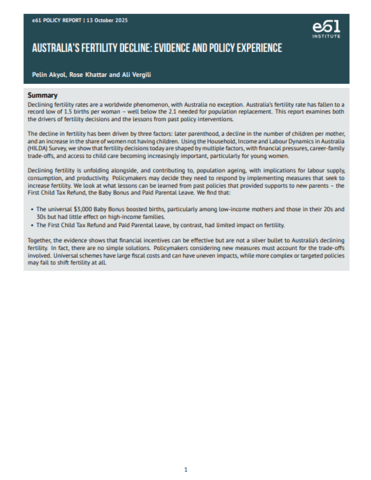
Australia's fertility decline: evidence and policy experience
Declining fertility rates are a worldwide phenomenon, with Australia no exception. Australia’s fertility rate has fallen to a record low of 1.5 births per woman. This report examines both the drivers of fertility decisions and the lessons from past policy interventions. It finds the decline in fertility has been driven by three factors.
Report
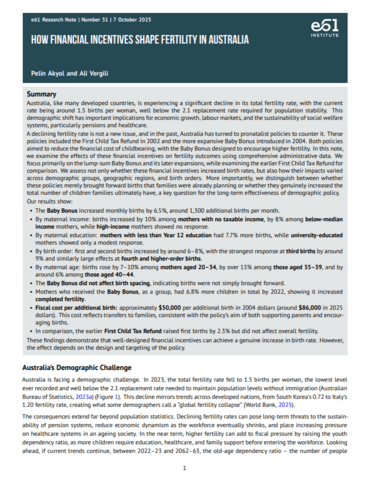
How financial incentives shape fertility in Australia
Australia, like many developed countries, is experiencing a significant decline in its total fertility rate. The First Child Tax Refund and the Baby Bonus policies aimed to reduce the financial cost of childbearing, with the Baby Bonus designed to encourage higher fertility. This note examines the effects of these financial incentives on fertility outcomes.
Briefing paper
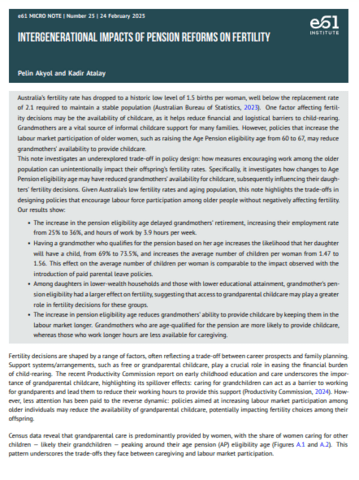
Intergenerational impacts of pension reforms on fertility
This paper investigates an underexplored trade-off in policy design: how measures encouraging work among the older population can unintentionally impact their offspring’s fertility rates. It finds that the unintended impact on the birth rate is comparable to that observed with the introduction of paid parental leave policies.

Report
2024 Population statement
An exploration of Australia’s population dynamics following the COVID‑19 pandemic. Australia’s population is projected to grow from 27.1 million people in 2024 to 31.3 million people by 2034–35. Net overseas migration peaked in 2022–23 and is declining.