

Population
Alternative labels
Population strategies
Report
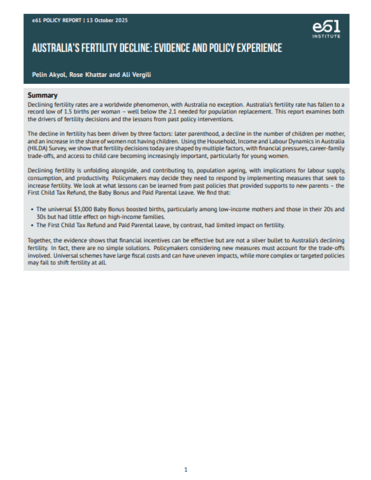
Australia's fertility decline: evidence and policy experience
Declining fertility rates are a worldwide phenomenon, with Australia no exception. Australia’s fertility rate has fallen to a record low of 1.5 births per woman. This report examines both the drivers of fertility decisions and the lessons from past policy interventions. It finds the decline in fertility has been driven by three factors.
Report
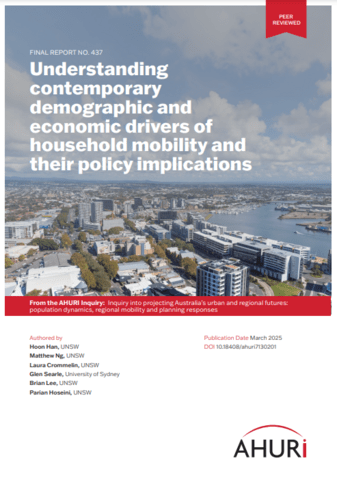
Understanding contemporary demographic and economic drivers of household mobility and their policy implications
This research looked at why people move between urban and regional Australia, and identified the social, economic, demographic and policy factors driving these population shifts. Apart from 2013, since 2007 more people have moved from capital cities than to them. The report concludes that policies to attract regional migration can be improved.
Report
Improving small area population projections
Understanding the patterns and impacts of population migrations within Australia is key for governments and providers of housing, infrastructure and services to be able to plan where they will prioritise resources. This research critically assesses the population projection methods available to Australian decision-makers and planners. A significant finding is that because different users need different...

Report
Rural and regional development in NSW in the aftermath of COVID-19
This paper reviews recent demographic shifts in rural and regional New South Wales. It examines how the pandemic disrupted pre-COVID migration trends and looks forward to 2030, identifying key population debates of relevance to New South Wales.

Report
2022 Population statement
Over the past year, restrictions have eased and Australia is adjusting to living with COVID-19. The 2022 Population Statement details how Australia’s population growth is projected to recover and how it is expected to change over the next decade, reflecting longstanding demographic trends like population ageing.