

Ageing population
Alternative labels
Ageing society
Aging society
Population ageing

Report
2025 Population statement
An exploration of how Australia’s population is changing and what the future might look like. The population surpassed 27.5 million in 2025 and growth will slow due to lower migration and fertility. The report includes sections on ageing, life expectancy and mortality, and introduces new 40‑year projections for states, territories, cities and regions.
Report
Supporting a healthy and productive nation
Australia needs to modernise its health and care system to make it more sustainable, reduce cost pressures by embracing technology, lift productivity and deliver higher standards of care for all generations, according to this report. The report provides a blueprint outlining the essential steps to be taken now to ensure a healthier, more productive nation.

Report
OECD employment outlook 2025: can we get through the demographic crunch?
This outlook looks at the latest labour market developments and prospects in OECD member countries. It also discusses the challenges population ageing poses more generally. The consequences of an ageing workforce for productivity growth are analysed. Without swift changes in policies and behaviours, GDP per capita growth will slow down significantly in most OECD countries.

Report
Strengthening regional policy for resilient places
This paper explores how regional development policies can enhance resilience and competitiveness in the face of global shocks, transitions and persistent inequalities. It argues for a shift toward place-based strategies that address spatial disparities and leverage local assets to drive sustainable productivity growth.
Briefing paper
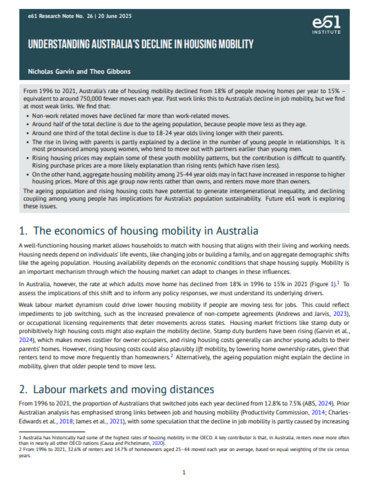
Understanding Australia's decline in housing mobility
From 1996 to 2021, Australia’s rate of housing mobility declined from 18% to 15%. This paper assesses the implications of this shift and outlines the underlying drivers. Past work links this to Australia’s decline in job mobility, but this paper finds at most weak links. The findings challenge a number of common narratives.