

First Peoples families
Alternative labels
Indigenous families

Report
How whānau and teachers support tamariki Māori to be successful in learning and education
This study examines the ways that whānau (extended family) believe they, and teachers, can best support ākonga (learners) to successfully navigate their educational experiences and contexts both at school and at home.
Report
Family is culture: community report card
The annual Family is Culture Community Report Card has been developed to provide an independent, Aboriginal community perspective on the NSW Government’s implementation of the 2019 Family Is Culture Review Report (FIC Review Report) recommendations. The key issues highlighted are system failures, ineffective transitions to Aboriginal community-controlled organisations, and neglected early intervention funding.
Literature review
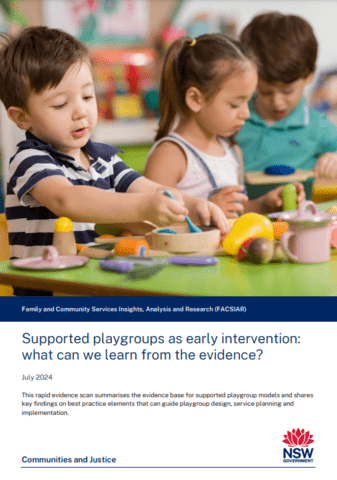
Supported playgroups as early intervention: what can we learn from the evidence?
This report summarises the findings from a rapid evidence scan that explored the evidence base for supported playgroup models. The evidence base for supported playgroup models is emerging. The few quantitative evaluations available provide some evidence that supported playgroups can improve child outcomes, including language, cognition, behaviour, socialisation, transition to school; and parent outcomes, including...
Report
COMPASS: Whānau Pasifika navigating schooling in Aotearoa New Zealand
This report focuses on the perspectives of whānau Pasifika as they express their attitudes and beliefs about what success looks like for their tamariki and why success is important. It employs the Indigenous practice of wayfinding to frame discussions of success through a range of values whānau Pasifika hold, and supportive characteristics they enact that...
Report
Holding on to our future
This inquiry report finds that South Australia is unnecessarily removing disproportionate and growing numbers of Aboriginal children from their families and communities, causing long term harm to their health, wellbeing and life chances, when they could be responding in a more child-family centred and culturally-responsive way.