

Randomised control trial
Alternative labels
RCT
Randomised trial
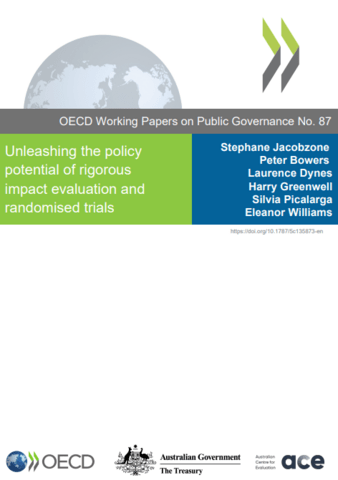
Working paper
Unleashing the policy potential of rigorous impact evaluation and randomised trials
This report explores how governments can overcome barriers to deliver high-quality impact evaluations to contribute to policy development. It sets out the main evaluation methods available, ranging from randomised trials to quasi-experimental approaches, and highlights the conditions under which each can be applied.
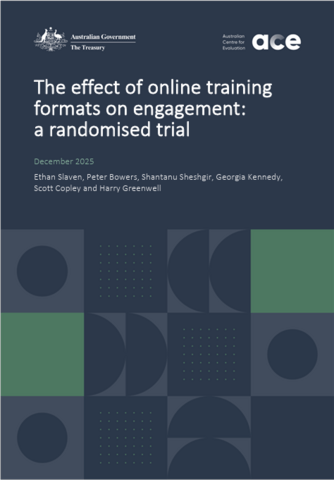
Evaluation
The effect of online training formats on engagement: a randomised trial
This rapid evaluation compared three online training formats for professional development in the Australian Public Service – click‑through e‑learning, micro‑learning video and podcast – to inform future delivery. Using a randomised trial, survey and focus groups, it found that the video format was the most suitable option, offering strong effectiveness at a lower cost for...

Evaluation
Sustaining professional learning outcomes: evaluating the effectiveness of ‘booster’ interventions
Professional learning is a commonly used strategy for helping teachers develop the skills and knowledge they need to use evidence-based practices in the classroom. This report presents the findings of a randomised trial in 17 primary and secondary schools in Western Australia examining the effectiveness of scalable 'booster' interventions as a follow-up to professional learning.
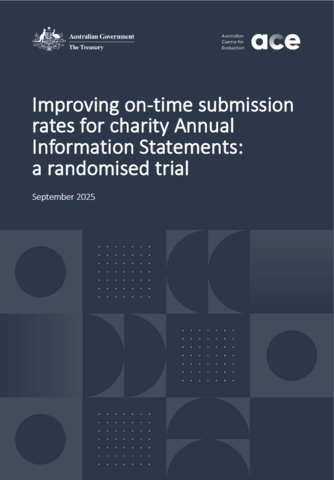
Evaluation
Improving on-time submission rates for charity annual information statements: a randomised trial
This evaluation tested whether an extra email reminder could improve timely charity reporting. Involving 15,000 charities, the trial showed that sending a direct reminder to someone responsible increased on-time submissions from 56% to 62%. The approach worked across all charity types, proving simple nudges can boost compliance.
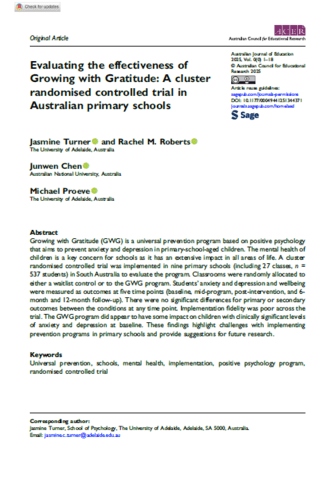
Journal article
Evaluating the effectiveness of Growing with Gratitude: A cluster randomised controlled trial in Australian primary schools
Growing with Gratitude is a universal prevention program based on positive psychology that aims to prevent anxiety and depression in primary-school-aged children. A cluster randomised controlled trial was implemented in nine South Australian primary schools to evaluate the program. The findings highlight challenges with implementing prevention programs in primary schools and provide suggestions for future...