

Widening participation
Report
Enabling programs in Australian higher education
Enabling programs, as an alternative to Australian Tertiary Admission Rank (ATAR)-based entry pathways to university, are a key mechanism for widening participation in Australian higher education, particularly for equity students. Drawing on recently released data, this report focuses on changes in enabling program participation rates across Australia from 2014 to 2023.
Discussion paper
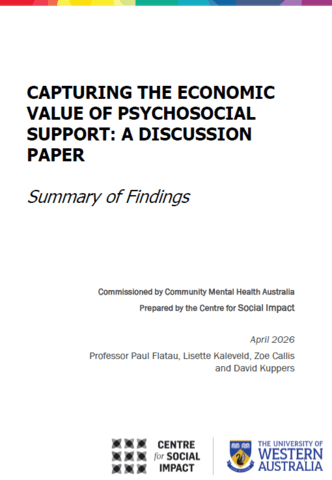
Capturing the economic value of psychosocial support: a discussion paper
This discussion paper examines psychosocial support in Australia’s mental health system and the economic evidence of its impact. While emerging findings indicate mental, social, and economic benefits, robust evaluation remains limited. Gaps include definitions, frameworks, and system-level data. The paper calls for investment in measurement, mapping, and economic evaluation to strengthen evidence and inform reform.
Report
Mode of attendance in Australian higher education
This report focuses on changes in the mode of attendance among Australian domestic undergraduate students over the past four years, with a focus on the 2024 period. It explored whether students were studying on-campus (internal), online (external), or through a mix of both (multi-modal), and how this varied across equity groups.
Systematic review
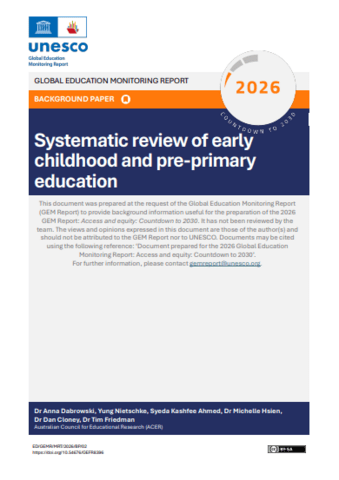
Systematic review of early childhood and pre-primary education
This systematic review synthesises global evidence from academic and grey literature published between 2015 and 2025, examining effective policies and interventions aimed at increasing early childhood care and education participation across diverse country contexts, with a focus on equity dimensions such as gender, disability, socio-economic status and geographic location.
Report
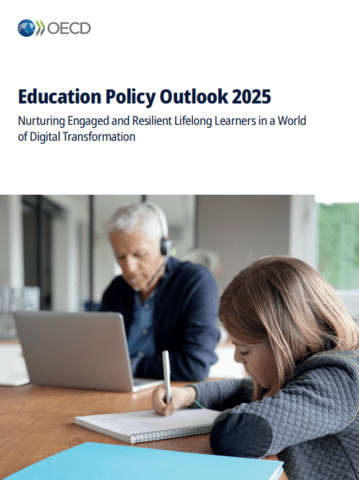
Education policy outlook 2025
This report explores how countries and economies can strengthen individuals’ agency as lifelong learners. Drawing on analysis of policies across 35 education systems, as well as international evidence and policy developments, the report explores how countries design and implement lifelong learning policies. It identifies four critical life moments when individuals are particularly open to learning.