

Crisis accommodation
Alternative labels
Shelters for the homeless
Emergency housing for the homeless
Report
With courage: South Australia’s vision beyond violence
The report is the culmination of a 12-month Royal Commission involving extensive engagement with South Australians impacted by domestic, family and sexual violence. It contains 136 recommendations which lay out a roadmap for the state in which domestic, family and sexual violence is no longer tolerated and no longer possible.
Report
MCM’s Victorian youth homelessness snapshot 2025
The snapshot represents, on a given day in 2025, the reality faced by young people accessing MCM’s homelessness programs in Victoria, Australia. The data confirms that young people experiencing homelessness are navigating a system that is fragmented and reactive, not proactive or preventive. It confirms the urgent and growing need for early intervention, housing and...
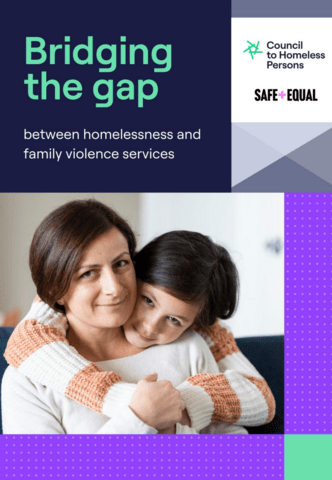
Report
Bridging the gap between homelessness and family violence services
This report seeks to understand the extent to which victim survivors of family violence seeking crisis accommodation are being referred between the homelessness and family violence sectors and back, without receiving the service they are requesting. It makes a series of recommendations to better respond to family violence and homelessness.
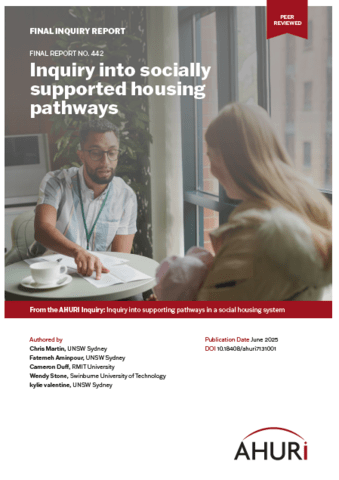
Report
Inquiry into socially supported housing pathways
Demand for social housing is outstripping supply. In addition to highlighting the urgency for more social housing, this research suggests governments could re-imagine the social housing system and transform social housing assistance. The research looked at how to change Australia's system into one that supports 'housing pathways'; how households move between different tenancies and tenures.
Working paper
Motels as crisis accommodation for families
In response to the current housing crisis, governments across the country are implementing strategies to facilitate access to crisis accommodation for people. Increasingly, this crisis accommodation is provided in the form of motels. This paper seeks to summarise current evidence relating specifically to at-risk families residing in motels, finding that it is a suboptimal model.