

First Peoples
Alternative labels
First Nations people
Indigenous
Indigenous peoples

Strategy
NSW Aboriginal water strategy
This is the first Aboriginal Water Strategy for New South Wales, Australia. It recognises that water is deeply important to Aboriginal peoples, forming a key part of their connection to Country and the life blood of culture and communities. It aims to keep and strengthen these connections by involving Aboriginal people in water management and...
Report
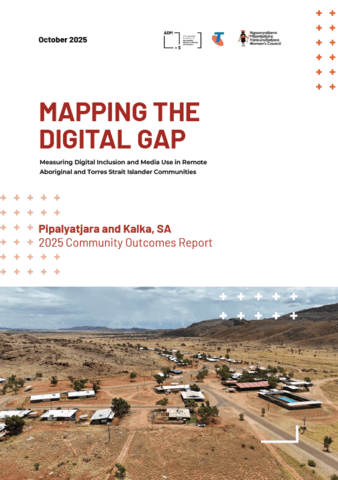
Mapping the digital gap: Pipalyatjara and Kalka, SA 2025 community outcomes report
This report presents updated findings from the first and second research visit to adjacent communities Pipalyatjara and Kalka in South Australia's (SA's) Aṉangu Pitjantjatjara Yankunytjatjara APY Lands. It describes changes in First Nations digital inclusion over two years, outlining the state and usage of communications and media services from 2024 to 2025.
Briefing paper
Statewide Treaty Bill 2025: Bill brief
The Statewide Treaty Bill 2025 introduced in Victoria will give effect to the first treaty in Australia between First Peoples and a government if it passes both Houses of Parliament. This brief provides an overview of the Bill and the process leading up to its introduction. It covers insights into the key pillars of Treaty.

Report
Co-design partnerships: a mutual exchange
The purpose of the project was to create clarity around what is needed for disability representative and carer organisations, disability advocacy organisations and other consumer-led and disability capacity strengthening organisations. To be able to be meaningfully involved in disability, involvement of these organisations is crucial across the research continuum.
Report
Footprints in time: the Longitudinal Study of Indigenous Children (LSIC) early childhood report
This report explores early childhood experiences and the ways these experiences relate to later outcomes for Aboriginal and Torres Strait Islander children and their families. Knowing more about what helps children from their early years through to their teenage years means communities can feel stronger, and services can be better planned and supported.