

Disasters
Alternative labels
Natural disasters
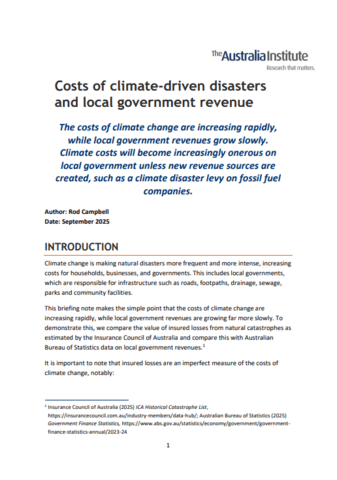
Briefing paper
Costs of climate-driven disasters and local government revenue
Climate change is making natural disasters more frequent and more intense, increasing costs for households, businesses and governments. This includes local governments, which are responsible for community infrastructure and facilities. This paper makes the point that the costs of climate change in Australia are increasing rapidly, while local government revenues are growing far more slowly.
Working paper
Inconsistencies in self-reported weather-related home damage among household members
Self-reported weather-related home damage has been widely used in examining the impact of natural disasters on various life outcomes. However, the accuracy of this measure remains largely unexamined. This study documents a previously unreported pattern in self-reported weather-related home damage. It finds that a range of factors are associated with the likelihood of reporting home...
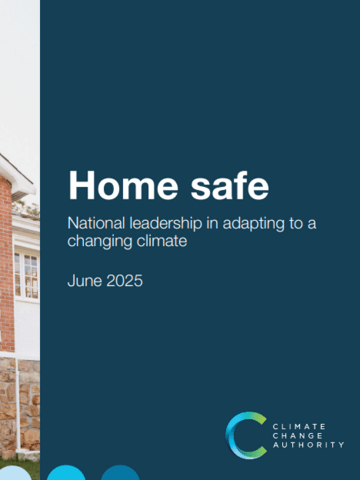
Report
Home safe: national leadership in adapting to a changing climate
The surge in extreme weather disasters around Australia reinforces the need for national leadership on adaptation in a changing climate. This report examines how climate change is increasing the frequency and severity of flooding, bushfires, extreme storms and coastal erosion, and the rising costs of these events for Australians. It calls for governments to reduce...
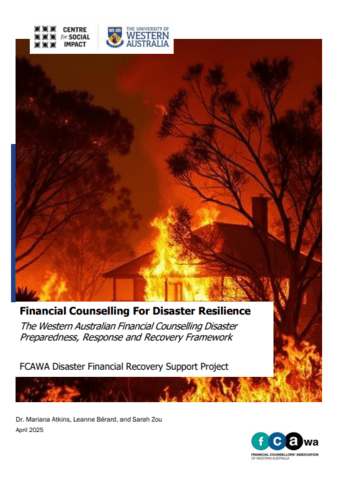
Strategy
Financial counselling for disaster resilience
Financial counselling is an identified key component of support needed to reduce risks and improve the resilience of communities experiencing natural hazards. This framework informs the financial counselling sector and the broader community on the role of financial counselling in disaster preparedness, response and recovery across Western Australia.

Strategy
General insurance industry action plan
The action plan outlines the insurance industry’s position on the remaining recommendations from the Parliamentary Flood Inquiry and the independent review of the industry’s Code of Practice. The plan provides seven areas of focus and key commitments, and responds to the Parliamentary inquiries into floods, the impact of climate risk on premiums and financial abuse.