

Welfare reform
Alternative labels
Review of Australia's welfare system
Report
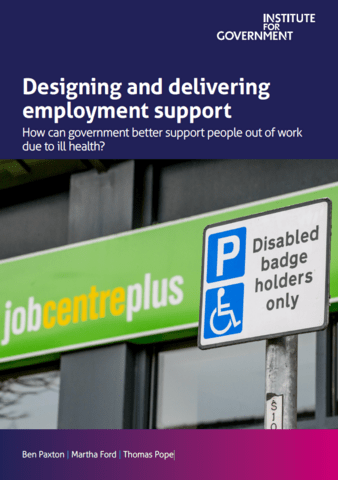
Designing and delivering employment support
This report examines how employment support for people out of work due to ill health or disability in England can be redesigned to be more effective. It critiques failed centralised models, explores the opportunities and risks of devolving support to local government, and sets out eight recommendations to deliver a renewed, locally led approach to...
Briefing paper
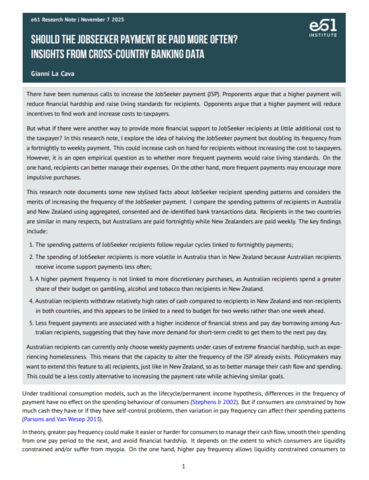
Should the JobSeeker payment be paid more often?
This paper explores the idea of halving the JobSeeker payment but doubling its frequency from a fortnightly to weekly payment. The paper documents JobSeeker recipient spending patterns and finds they face more financial stress, experience greater spending volatility and withdraw higher rates of cash than New Zealand recipients who receive weekly payments.
Working paper
The declining wellbeing of sole parents in Australia in the 21st century
Sole parent families, primarily headed by women, experience considerable social and economic disadvantage. Despite this, there is limited research that shows the specifics of this disadvantage. This research fills this gap through a detailed examination of several indicators measuring social and economic wellbeing for sole parents for the last 25 to 30 years in Australia.
Discussion paper
Opportunities for reform to improve workforce participation of Disability Support Pension recipients
Too many people with disability are locked out of employment. This report explores how targeted changes to the Australian Disability Support Pension (DSP) could reduce the financial risks and disincentives facing recipients who want to work. The report analyses how DSP taper rates, suspension rules and administrative complexity affect employment decisions and labour force participation.
Working paper
A fairer tax and welfare system for Australia
This paper highlights the inadequacy of the Australian welfare system for some groups and analyses how certain taxation and superannuation reforms could fund significant improvements in the financial position of Australians most in need. It proposes four budget-neutral policy options ranging from increasing working age payments through to a system-wide Guaranteed Minimum Income.