

Briefing paper
Briefing paper
Intergenerational impacts of pension reforms on fertility
This paper investigates an underexplored trade-off in policy design: how measures encouraging work among the older population can unintentionally impact their offspring’s fertility rates. It finds that the unintended impact on the birth rate is comparable to that observed with the introduction of paid parental leave policies.
Briefing paper
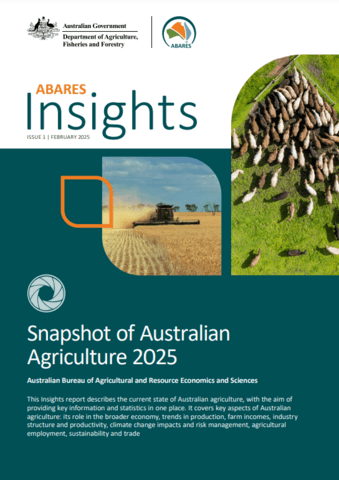
Snapshot of Australian agriculture 2025
An overview of the state of Australian agriculture, consolidating key statistics on the sector and its role in the broader economy. The snapshot shares data regarding land use, water consumption, export and employment. It also considers factors influencing the value of agricultural output, such as technological advancement, management practices and commodity prices.
Briefing paper
The need for rights-based reform of South Australia's child justice system
The Commissioner is calling for reforms to be made to South Australia’s child justice system to align it with a child rights-based approach. There are significant opportunities for the South Australian Government to reform the child justice and related systems in line with international human rights standards.
Briefing paper
A future made in Whyalla
South Australia’s Whyalla Steelworks has faced major challenges in recent months. This paper outlines the unique importance of the Whyalla Steelworks, and explains why a significant intervention by policymakers is likely the best choice ahead to ensure the operation is sustained and Australia’s sovereign manufacturing capacity is preserved.

Briefing paper
Cost of living crisis relief: insights from the COVID-19 financial support policies
This paper examines how two major policies responding to the COVID-19 pandemic affected the wellbeing of eligible recipients, one that increased liquidity by releasing personal savings and one that increased wealth through a government transfer. The findings suggest the former raised life satisfaction while the latter did not.