

Briefing paper
Briefing paper
Medical misogyny in Australian healthcare
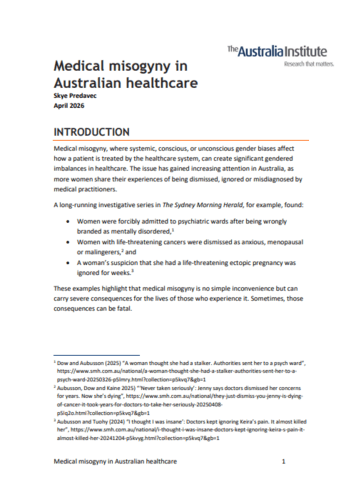
Medical misogyny, where systemic, conscious or unconscious gender biases affect how a patient is treated by the healthcare system, can create significant gendered imbalances in healthcare. This paper outlines some causes of medical misogyny and investigates its practical impacts on Australians. Addressing the crisis of medical misogyny requires structural change to Australian healthcare.
Briefing paper
No new gas and coal
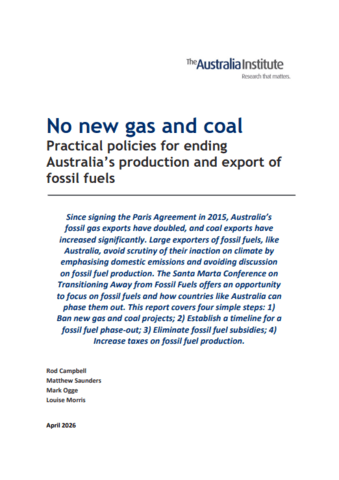
Since signing the Paris Agreement, Australia’s fossil gas exports have doubled, and coal exports have increased significantly. The Santa Marta Conference on Transitioning Away from Fossil Fuels offers an opportunity to focus on how countries like Australia can phase out fossil fuels. This paper covers four steps to phase out fossil fuels with minimal economic...
Briefing paper
Same amount, different tax: capital income tax calculator
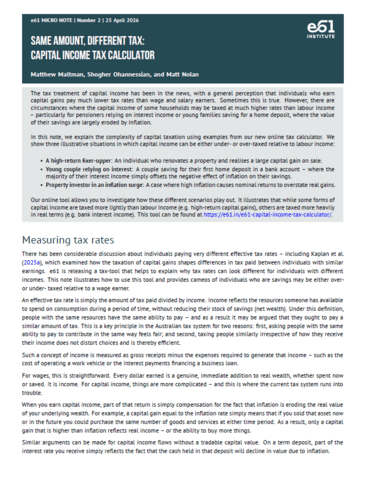
There is a perception that individuals who earn capital income pay much lower tax rates than wage and salary earners. This note explains the complexity of capital taxation using examples from a new online tax calculator. It shows three illustrative situations in which capital income can be either under- or over-taxed relative to labour income.
Briefing paper
Partnering for prevention: strengthening Australia’s chronic disease prevention system
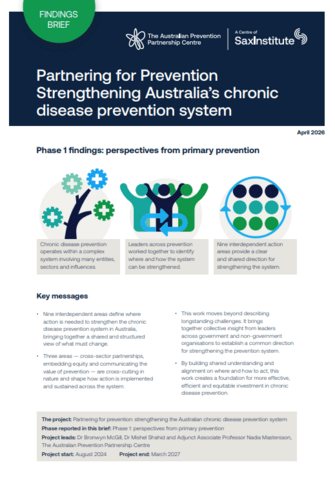
Strengthening chronic disease prevention requires more than individual programs. It depends on systems that support coordinated, equitable and well-governed action. This brief summarises insights from a Partnering for Prevention initiative, focused on primary prevention. It identifies nine action areas that define the key elements of a stronger chronic disease prevention system in Australia.
Briefing paper
Opportunity to action: the big picture
In a fiscally challenging environment, data indicates that governments should pursue strategic and structural change to maximise government investment in Australia’s arts and culture system. On a GDP basis, Australia is spending around one-quarter less than its OECD peers on ‘recreation, culture and religion’. This paper identifies actions and big picture opportunities.