

Australia
Briefing paper
Disability and the criminal justice system
This paper examines the systemic over‑representation of people with disability in the criminal justice system, highlighting challenges across policing, bail access, court diversion, custody and post‑release support. It shows how inadequate accommodations and services worsen outcomes, and calls for stronger, disability‑responsive policies to reduce harm, improve justice access, and support safe reintegration.

Evaluation
Sustaining professional learning outcomes: evaluating the effectiveness of ‘booster’ interventions
Professional learning is a commonly used strategy for helping teachers develop the skills and knowledge they need to use evidence-based practices in the classroom. This report presents the findings of a randomised trial in 17 primary and secondary schools in Western Australia examining the effectiveness of scalable 'booster' interventions as a follow-up to professional learning.

Briefing paper
The Albanese Government’s integrity report card
Six months after its 2025 re-election, the Australian Government faces serious integrity challenges. This report card assesses the Government’s actions – and inaction – across key democratic safeguards: transparency, merit-based appointments, limits on undue influence, strengthening the public service and support for the institutions that hold power to account. The paper urges the Government to...
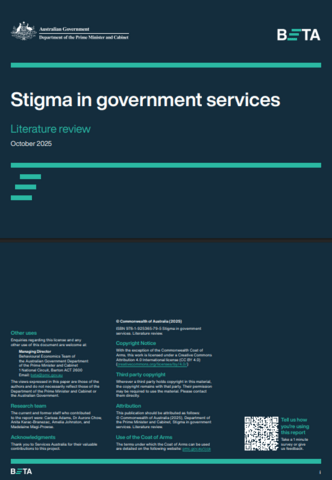
Literature review
Stigma in government services
A literature review to understand how some Australian Government services could become stigmatised, and how stigma could be reduced in the policy design and delivery of Australian Government services. It found that there are different ways stigma can be experienced by Australians and different drivers of government services stigma including public attitudes, policy settings and...
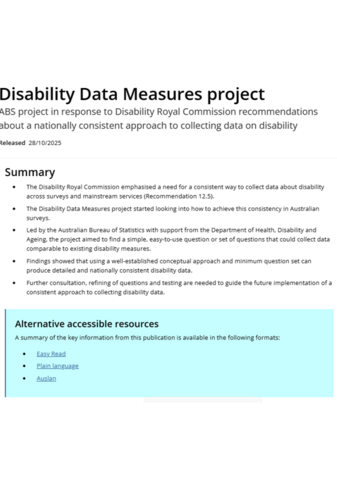
Report
Disability data measures project
This project seeks to improve disability data collection following the Disability Royal Commission’s call for consistency across surveys and services. Findings suggest that a strong conceptual framework and minimal question set can produce detailed, nationally consistent data. Further consultation, refinement and testing are needed for implementation.