

Australia
Assessment
Health legislation amendment (improving choice and transparency for private health consumers) Bill: regulating premiums
Private health insurers can open a new health insurance product at any time, at any premium, without the Health Minister’s approval. This Impact Analysis considers a preferred policy approach requiring insurers to seek the Minister’s approval for premiums for new products, and existing products for which cover or value to consumers has been reduced.
Report
Drowning in a sea of diagnoses. How medicalising distress is overwhelming Australia’s mental health system and failing those most in need
Australia's mental health system is failing those most in need – not because of neglect or underfunding, but because of overdiagnosis and misallocation, this report warns. The report shows that programs designed to expand access to care have created a system that treats ordinary distress as pathology. It calls for reform built on five key...
Guide
Supporting children and young people experiencing domestic, family and sexual violence
This resource supports frontline workers to strengthen safety and recovery responses for children and young people experiencing domestic, family and sexual violence. Focused on translating evidence into everyday practice, the resource is particularly relevant for practitioners working in regional and rural contexts, where service gaps, confidentiality risks and workforce pressures shape how support is delivered.
Report
Report 514: Inquiry into the procurement of mandated national support and advocacy services for victims of child sexual abuse
A report from an inquiry into the procurement process conducted by the Attorney-General’s department to deliver new child sexual abuse-related national services. These procurements arose from the recommendations of the 2017 Royal Commission into Institutional Reponses to Child Sexual Abuse. The report found the length of time taken to progress these procurements was deeply concerning.
Journal article
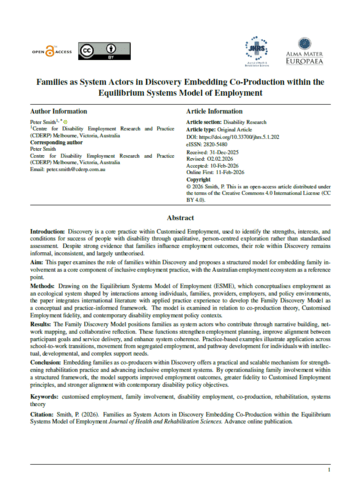
Families as system actors in discovery embedding co-production within the Equilibrium Systems Model of Employment
This paper examines the overlooked role of families within Customised Employment. It introduces the Family Discovery Model, positioning families as active contributors to narrative building, network mapping and reflective planning. Structured involvement strengthens employment pathways, supports transitions, and improves alignment with policy. Embedding families as co-producers enhances outcomes and system coherence.