

Pacific Area
Policy report
Pacific maritime security cooperation: partnerships, priorities, and possibilities
This paper makes initial policy proposals concerning the following Pacific maritime security issues: responding to geopolitical competition; legal and regulatory environment; fisheries cooperation; transnational crime; and humanitarian assistance and disaster relief. It also makes initial policy proposals for how partner countries can enhance their maritime security assistance and cooperation in the Pacific Islands region.
Report
Pacific maritime security cooperation: views from the Pacific and its partners
The ocean is critical to the lives and livelihoods of Pacific people, and Pacific Island countries manage more than 10% of the earth’s oceans. This set of 13 papers examines what maritime security means in the Pacific Islands region, what maritime security mechanisms exist and what forms of assistance partners are providing in the region.
Report
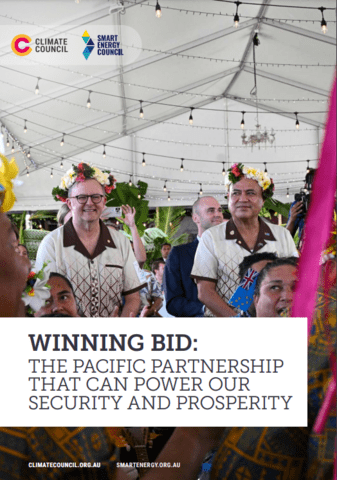
Winning bid: the Pacific partnership that can power our security and prosperity
Hosting the United Nations climate summit (COP) is a major opportunity to safeguard Australia's security, while ensuring an economic future as a clean energy powerhouse. This report explains how hosting the event presents the opportunity to showcase Australia's advantages in abundant solar, wind, storage and innovation, to service the big energy needs of nearby countries...
Briefing paper
The great game in the Pacific Islands
Pacific Islanders have found their region, previously undervalued by larger powers, now a focal point for strategic competition. Faced with this new “great game”, Pacific Island countries have become diplomatic price-setters and are leveraging increased competition to maximise development benefits. But unbridled strategic rivalry also presents challenges to good governance and transparency in the region...

Report
How whānau and teachers support tamariki Māori to be successful in learning and education
This study examines the ways that whānau (extended family) believe they, and teachers, can best support ākonga (learners) to successfully navigate their educational experiences and contexts both at school and at home.