

Wearable technology
Alternative labels
Internet of bodies

Report
Peace of mind: navigating the ethical frontiers of neurotechnology and human rights
This report explores how the benefits of neurotechnology can be embraced while making sure human dignity is at the forefront. Neurotechnology refers broadly to devices, systems and procedures that interact with the human nervous system to access, interpret or influence its activity. The report provides 18 recommendations.
Report
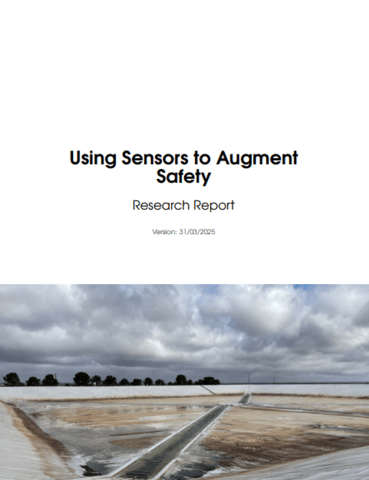
Using sensors to augment safety
This research explored the potential of smart wearables to enhance safety in water utility operations – an area not yet widely studied. The project trialled a mix of established and emerging sensing technologies across three sites in South Australia. The research highlights the value of integrating wearable technologies into safety systems for water utilities.
Briefing paper
Protecting cognition: background paper on human rights and neurotechnology
The Australian Human Rights Commission is focusing on the rapid development of neurotechnology and how it may challenge human rights. This paper represents an important first step in stimulating discussions and identifying gaps in the Australian response to neurotechnologies.
Report
How police body-worn cameras can facilitate misidentification in domestic and family violence responses
Police body-worn camera (BWC) technologies are deployed by all Australian police agencies, including in frontline responses to domestic and family violence (DFV). This paper presents the findings from the first Australian study focused on how women DFV victim-survivors view and experience BWC technology in police call-outs and legal proceedings.
Article
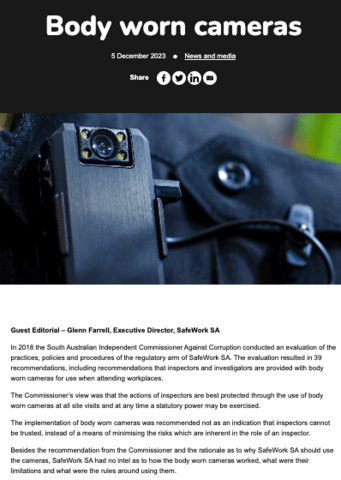
Body worn cameras
This article discusses an evaluation of a trial of body worn cameras by SafeWork SA inspectors and investigators when attending workplaces. The trial showed that there were several benefits to implementing the use of body worn cameras.