

 SHARE
SHARE
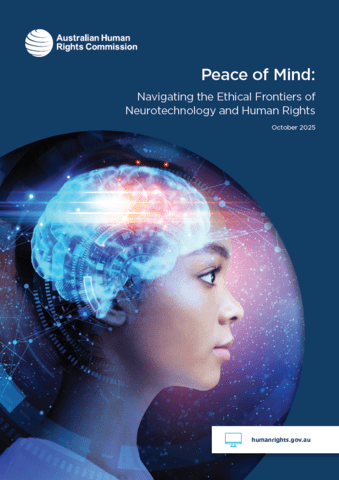
Peace of mind: navigating the ethical frontiers of neurotechnology and human rights

This final report is the culmination of a multi-year project examining the human rights impacts of neurotechnology. It explores how the benefits of neurotechnology can be embraced while making sure human dignity is at the forefront. Neurotechnology refers broadly to devices, systems and procedures that interact with the human nervous system to access, interpret or influence its activity.
The report explores how neurotechnology may affect rights like privacy, freedom of expression and freedom of thought. It also explores the potential impacts in different areas of our lives and the ways that different groups within our community, including children and people with a disability, might experience these impacts differently.
The report provides 18 recommendations.
Key Recommendations
- Human rights protections are embedded at every stage of neurotechnology development.
- Reform of Australia’s privacy laws to explicitly protect neural data.
- Informed consent for all users.
- Not be used to coerce, manipulate or punish individuals for their thoughts.
- Prohibit neuromarketing for political and consumer purposes especially targeting children.
- Workplace neurotechnology should be banned except for critical safety needs in high-risk industries.
- Creation of a specialist neurotechnology safety agency.
- Policy and practice prioritise the needs of children, people with disabilities and older adults.
- Stronger safeguards against discrimination and coercion.
- Moratorium on the use of neurotechnology in criminal justice until an inquiry is conducted.
- Regular legal reviews of military applications to comply with international law.
Protecting cognition: background paper on human rights and neurotechnology
