

 SHARE
SHARE
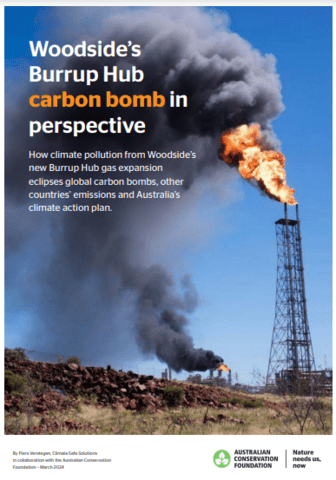
Woodside’s Burrup Hub carbon bomb in perspective

For the first time, this analysis places the lifetime carbon pollution that would result from these projects in an international context, identifying the Burrup Hub mega project as the largest new 'carbon bomb' in the Southern Hemisphere and in the top ten most polluting new fossil fuel developments in the world. (Carbon bombs are defined as fossil fuel projects that will produce over one billion tonnes of carbon pollution.)
The existing Burrup Hub gas export precinct operated by Woodside Energy is already Australia’s largest carbon polluter. However, instead of phasing out fossil fuel production and transitioning to renewable energy, Woodside is planning to double-down by expanding production of the fossil fuels that are driving dangerous climate change and extreme weather events such as wildfires, floods, heatwaves, droughts and cyclones.
Proposed expansions and extensions at the Burrup Hub mega project, including two giant new offshore gas developments are set to dramatically extend and increase gas production, transforming Australia’s largest and oldest fossil gas export precinct into one of the largest sources of carbon pollution on the planet.
Soon, the Australian government will consider key approval decisions for the Burrup Hub mega project, including the Scarborough gas field operations, the North West Shelf 50-year extension, and the Browse Basin gas development. Despite the staggering amount of pollution that will result, to date there has been no comprehensive assessment of the impact of these developments on the climate, or on Australia’s national emissions reduction goals.
This analysis presents a clear and compelling case for the Australian government to reject Woodside’s planned Burrup Hub mega project. Allowing these developments to proceed with no assessment of their impacts on the climate and Australia’s emissions reduction goals would amount to a broken promise by the Albanese Government. This would also be a reckless decision that would directly undermine international efforts on climate change and seriously damage Australia’s credibility on these issues.
