

 SHARE
SHARE
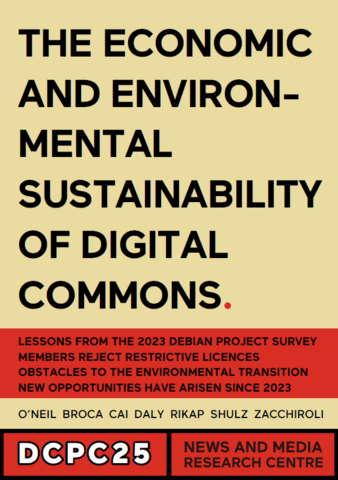
The economic and environmental sustainability of digital commons

Digital commons are shared information and knowledge resources such as data, software and cultural content.
This report, based on a Debian community survey, examines the economic and environmental sustainability of free, libre and open source software (FLOSS), its role in fostering sustainable production and evolving worker contributions since 2016. Debian is a free, open source software suite combining an operating system and applications, widely used worldwide across organisations, governments, individuals and critical digital infrastructure.
The report highlights community rejection of restrictive licences as environmental incentives, critiques predatory information technology (IT) practices and details workplace obstacles – economic, organisational and technical – to reducing environmental impacts.
Key findings
- Rejection by the community of the use of restrictive licences to incentivise environmental action.
- Results may have been influenced by the respondents’ location.
- Respondents believe that the risks posed by free-riding behaviour and industrial predation affect FLOSS in general much more than Debian.
- There are obstacles to the environmental transition.
- Opportunities have arisen since 2023. It is also noted that the global situation has changed since 2023.
