

 SHARE
SHARE
Surviving in a cost-of-living crisis: Australia's fraying care infrastructures

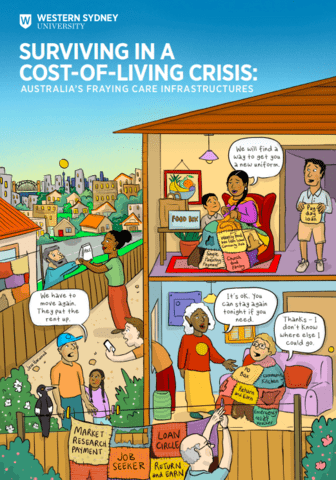
This report examines how Australia's care infrastructures, encompassing welfare, housing, food and community support systems are fraying and increasingly failing to meet the basic needs of those on low- or no- income. Care infrastructures are the range of supports that people draw on to survive, including the welfare system, housing, healthcare, family and social networks, and other resources.
Drawing on in-depth interviews with people reliant on JobSeeker and the Disability Support Pension as well as people seeking asylum without access to income support in Central Western Sydney, New South Wales, the report documents the labour-intensive and precarious work required to piece together fragmented supports amid a worsening cost-of-living crisis. The report also includes the perspectives of frontline support workers in organisations that provide food relief, accommodation, emergency support payments, advocacy and community development in the region.
It reveals how inadequate income support, unaffordable housing and overstretched community services compound hardship and erode wellbeing, leaving individuals and organisations 'holding on by a thread'. The findings also highlight the creativity and mutual care that sustain life in these conditions, but that sometimes put people at risk.
The report concludes that meaningful reform requires raising income support to a liveable rate, addressing housing affordability and supply, and properly resourcing community organisations to shift from crisis management to supporting people to live flourishing lives.
