

Report
 SHARE
SHARE
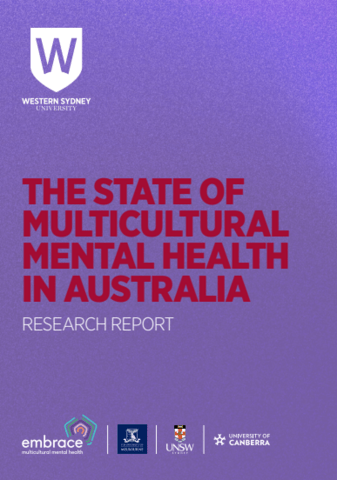
The state of multicultural mental health in Australia
Research report
Kingsley Agho, Bingqin Li, Anthony F Jorm, Luis Salvador-Carulla, Nasser Bagheri, Andre M Renzaho
Publisher
Best practice
Policy analysis
Mental health
Preventative health
Health services accessibility
Disability
Migrants
Refugees
Culturally and Linguistically Diverse (CALD)
Australia

Description
This report examines the extent to which mental health policy intent, legal obligations and fundamental principles are being realised in practice. It provides a snapshot of how well Australia’s mental health system is supporting multicultural communities – and where gaps remain. It also identifies examples of emerging good practice with the potential to be adopted at scale and contribute to the realisation of policy objectives.
Key findings
- Australia has an increasingly diverse multicultural profile. This increasingly diverse population presents significant challenges for mental health policy and practice.
- Overseas-born Australians are more likely than those born in Australia to delay treatment for more than 10 years for both anxiety and mood disorders like depression.
- Commonly reported barriers to help seeking include language barriers, low mental health literacy, negative stigma around mental health, difficulties navigating service systems and limited availability of culturally safe and responsive services.
Key recommendations
- Investing in prevention programs, including culturally tailored mental health literacy and anti-stigma initiatives, as well as early support and care.
- Removing barriers through flexible, culturally safe service models.
- Strengthening partnerships and co-design with multicultural communities.
- Supporting genuine lived experience leadership in policy and governance.
- Building the bilingual and bicultural mental health workforce.
- Improving data quality so multicultural communities are more visible in national evidence.
Publication Details
DOI:
10.26183/5y0n-qs14
Copyright:
Mental Health Australia Ltd 2026
Access Rights Type:
open
Post date:
5 May 2026
