

Mental health
Alternative labels
Mental illness
Mental ill-health
Psychological health
Mental wellbeing
Mental health services
Report
Australia's health 2026
The report presents the latest key findings and a selection of short topic-based narratives, offering insights into contemporary health and wellbeing issues in Australia. It charts the nations’ progress while also informing priorities for future improvement. It finds that 3 in 5 Australians live with at least one chronic condition.
Report
Capturing the economic value of psychosocial support
This report provides an overview of the economic evidence available in relation to psychosocial support programs within Australia’s mental health system. The report concludes there is promising but limited evidence to demonstrate that psychosocial supports not only improve the wellbeing and quality of life for individuals but also lead to economic gains.
Report
National stigma and discrimination report card
The report card provides a nationally representative picture of the scale and impact of mental health stigma and discrimination in Australia. It shows where progress has been made in reducing stigma and discrimination, and where more work is needed. The most significant burden of discrimination was in relation to finding and keeping a job.
Research Summary
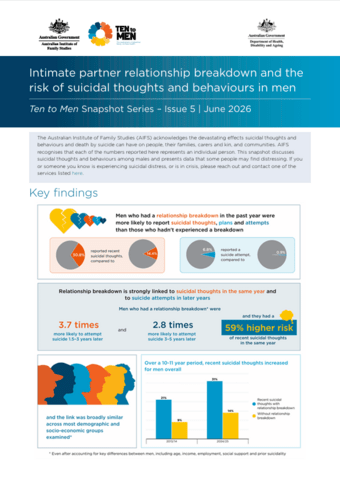
Intimate partner relationship breakdown and the risk of suicidal thoughts and behaviours in men
This report explores the experiences of Australian men aged 15 to 67, finding that those who have experienced a relationship breakdown are more likely to report suicidal thoughts and behaviours. It discusses a range of implications for policy and practice, including a population-wide approach to interventions following relationship breakdown.
Guide
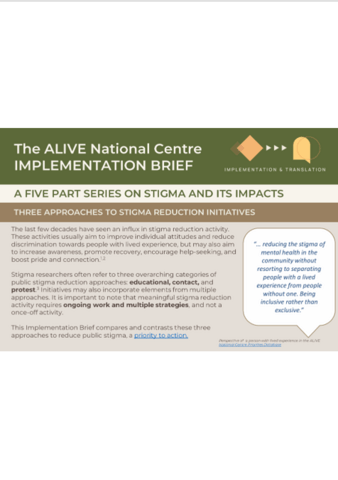
Three approaches to stigma reduction initiatives
This guide compares and contrasts three overarching categories of public stigma reduction approaches – educational, contact-based and protest-based – outlining what each involves, examples of each in practice, key considerations, and lived experience perspectives on their strengths and limitations.