

Preventative health
Strategy
National suicide prevention outcomes framework: data quality framework
This document describes what the framework is, why it is important for the National suicide prevention outcomes framework and who is responsible for using it. The Data quality framework is a systematic approach to defining, assessing and improving the quality of data relevant to the outcomes framework.
Report
Essential vaccines: performance report 2024–25
The report provides an assessment of Australian state and territory performance against the benchmarks outlined in the Essential Vaccines Schedule for the period 1 April 2024 to 31 March 2025. Five jurisdictions were deemed to have met all benchmarks assessed in this period.
Research Summary
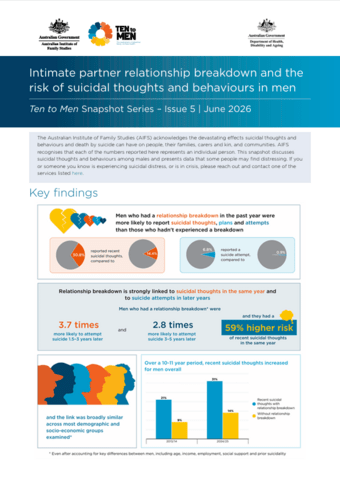
Intimate partner relationship breakdown and the risk of suicidal thoughts and behaviours in men
This report explores the experiences of Australian men aged 15 to 67, finding that those who have experienced a relationship breakdown are more likely to report suicidal thoughts and behaviours. It discusses a range of implications for policy and practice, including a population-wide approach to interventions following relationship breakdown.
Working paper
Research review on the effectiveness of youth and rangatahi mental health early intervention and secondary prevention approaches
This review examines the effectiveness of early intervention and secondary prevention approaches for supporting the mental health and wellbeing of young people and rangatahi aged 12-24 years. Overall, the evidence suggests many supports, including brief and low-intensity approaches, can reduce distress and improve wellbeing, functioning and coping.
Report
Feasibility study on options to limit unhealthy food marketing to children
The study explores unhealthy food marketing to children in Australia. It outlines the policy problem and rationale for action; overview of methodology; policy options for reducing children’s exposure to unhealthy food and drink marketing; and an assessment of potential impacts. The analysis indicates that current self-regulatory arrangements do not provide sufficient protection.