

Suicide
Alternative labels
Killing oneself
Self-killing
Strategy
National suicide prevention outcomes framework: data quality framework
This document describes what the framework is, why it is important for the National suicide prevention outcomes framework and who is responsible for using it. The Data quality framework is a systematic approach to defining, assessing and improving the quality of data relevant to the outcomes framework.
Research Summary
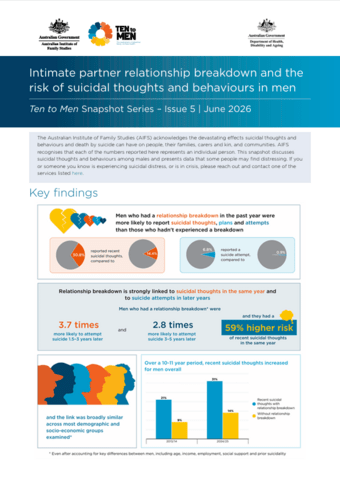
Intimate partner relationship breakdown and the risk of suicidal thoughts and behaviours in men
This report explores the experiences of Australian men aged 15 to 67, finding that those who have experienced a relationship breakdown are more likely to report suicidal thoughts and behaviours. It discusses a range of implications for policy and practice, including a population-wide approach to interventions following relationship breakdown.
Report
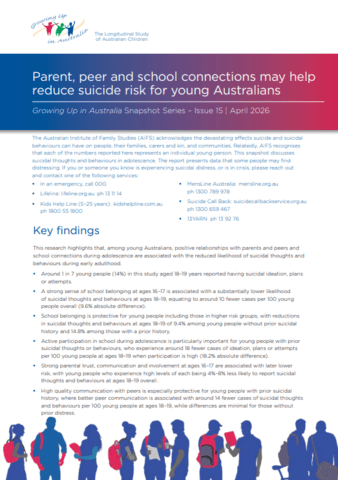
Parent, peer and school connections may help reduce suicide risk for young Australians
This snapshot discusses suicidal thoughts and behaviours in adolescence. This research highlights that, among young Australians, positive relationships with parents and peers and school connections during adolescence are associated with the reduced likelihood of suicidal thoughts and behaviours during early adulthood. Collectively, the evidence supports a cross-portfolio, prevention-focused approach to reduce risk.
Report
Suicide prevention policy development and monitoring
Suicide is the leading cause of death for Australians aged 15 to 44 years. From 2022–23 to 2025–26, the Department of Health, Disability and Ageing administered 41 suicide prevention measures. This report finds that four to five years after several national agreements, objectives to reduce suicide have not been achieved.
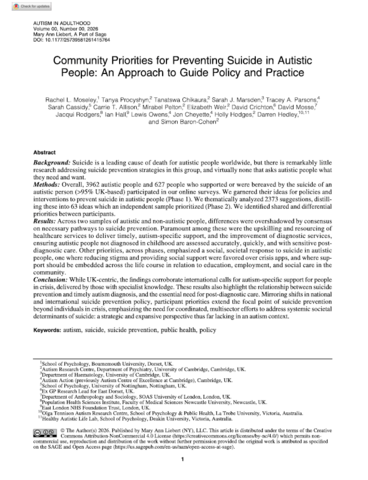
Journal article
Community priorities for preventing suicide in autistic people
This article describes the findings from online surveys of autistic people and supporters examining ideas for policies and interventions to prevent suicide in autistic people. Findings highlight the need for upskilling and resourcing healthcare services to deliver autism-specific support at times of crisis and beyond.