

Organisation
OECD Publishing
Owning Institution:
Briefing paper
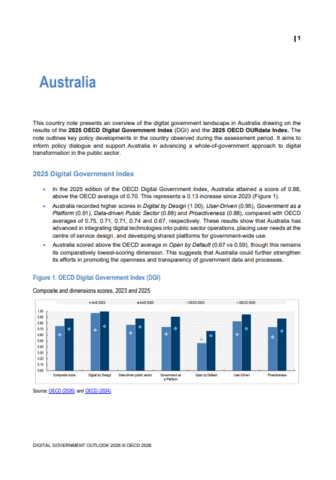
Digital government outlook 2026: Australia
This note presents an overview of the digital government landscape in Australia drawing on the results of 2025 OECD indexes. The note outlines key policy developments in the country observed during the assessment period. It aims to inform policy dialogue and support Australia in advancing a whole-of-government approach to digital transformation in the public sector.
Report
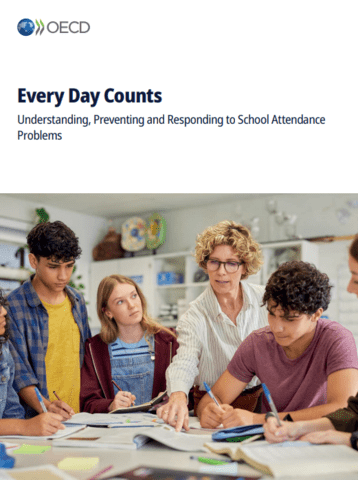
Every day counts: understanding, preventing and responding to school attendance problems
School attendance problems are no longer a marginal issue. This report synthesises evidence from an OECD survey, literature and international large-scale assessments to outline drivers and consequences of school absences. It takes stock of policies and practices for supporting school attendance and distils key messages and policy pointers emerging from the evidence presented.
Briefing paper
AI and skills: what we know so far
This policy brief summarises and brings together various pieces of OECD research to build a coherent narrative on what is known about artificial intelligence (AI) and skills. The policy brief highlights the importance of skills to make a success of AI and identifies several areas for policy action and future research.

Report
The people and the budget: empowering public understanding of public finances
Facing record public debt and mounting spending pressures, OECD countries must look beyond traditional tools to secure fiscal sustainability: it can no longer be achieved without public buy-in. This report highlights that empowering public understanding is now an essential component of modern budgeting. It outlines a strategy based on four pillars.
Case study
Korea’s Open Policy Lab: a participatory approach to public sector innovation
This case study examines Korea’s use of participatory and collaborative approaches to policymaking through the Open Policy Lab (OPL). The OPL functions both as a platform and a structured methodology, bringing together subject-matter experts, frontline practitioners and other stakeholders to co‑create policies. It focuses particularly on early‑stage policy design under conditions of uncertainty and complexity.