

Organisation
Australian Institute of Family Studies
Owning Institution:
Acronym:
AIFS
Website:
Report
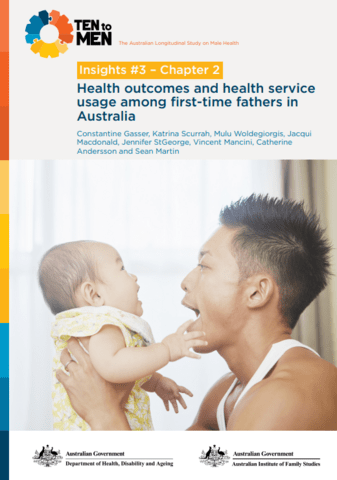
Health outcomes and health service usage among first-time fathers in Australia
Drawing on data from Australia's longitudinal study on male health, this report explores mental health, physical health and the barriers men face in accessing care when they become fathers for the first time. It finds that the role of health services in promoting preconception health is critical to ensure men are positioned to successfully navigate...
Guide
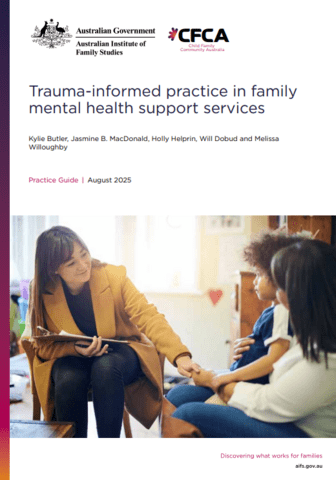
Trauma-informed practice in family mental health support services
This practice guide summarises research and practice evidence about strategies for trauma-informed practice. It covers what trauma-informed practice is; organisation-level responsibilities for implementing trauma-informed practice and barriers; and trauma-informed practice strategies practitioners can implement.

Report
New mothers, employment and income
Mothers’ employment rates in Australia have increased over recent decades but having a child is still a pivotal event. This report explores some of the diversity in the employment patterns of new mothers. The findings further build the evidence base on mothers’ employment and could be used to inform policy in a range of areas.
Report
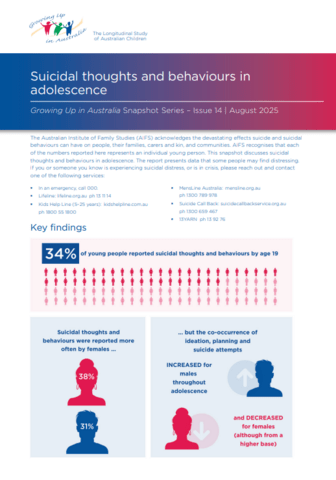
Suicidal thoughts and behaviours in adolescence
This snapshot discusses suicidal thoughts and behaviours in adolescence. It finds around one-third of Australian teenagers have experienced suicidal thoughts and behaviours in the last 12 months. The findings support the need for suicide prevention efforts to consider individual risk factors and key social determinants of suicidal thoughts and behaviours for young people.
Fact sheet
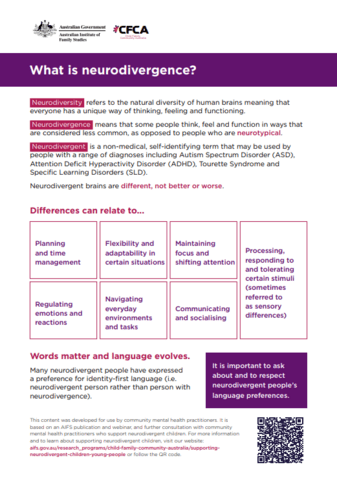
What is neurodivergence?
A short accessible information sheet that defines key terms relating to neurodivergence and addresses some common misconceptions. It is accompanied by practical guides on supporting neurodivergent children and young people. The aim is to enhance readers’ basic neurodivergence literacy, lay the groundwork for further learning and promote informed discussions about neurodiversity.