

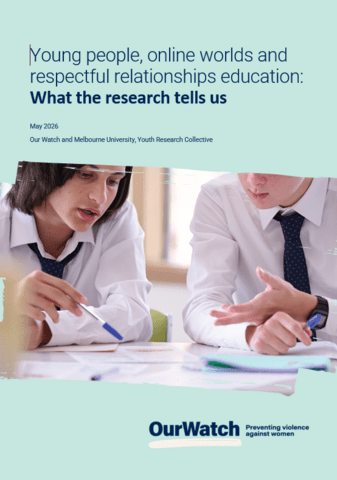
Report
Young people, online worlds and respectful relationships education: what the research tells us
This research summary aims to inform the design and development of evidence-based teaching and learning materials that are relevant to and supportive of children and young people, to enable respectful, equitable, inclusive and safe relationships in the Australian context. It examines young people’s experiences of sex, gender and relationships, both online and offline.
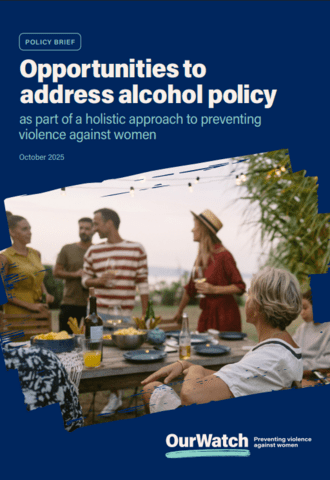
Policy report
Opportunities to address alcohol policy as part of a holistic approach to preventing violence against women
Heavy alcohol use by men can escalate and worsen their violent behaviour towards women. This policy brief recommends governments explicitly address the link between alcohol and gender-based violence in law, policy and regulation. It sets out practical opportunities for Australian policymakers as well as a range of other community-based strategies.
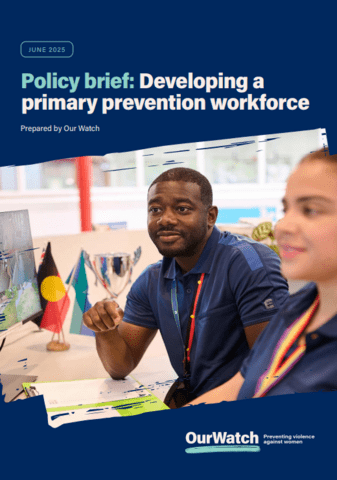
Policy report
Policy brief: developing a primary prevention workforce
This policy brief provides policymakers with guidance on how to build, strengthen and support the primary prevention workforce – whose roles contribute to the primary prevention of violence against women – in Australia. It outlines the short and long-term benefits of investing in this workforce and identifies opportunities for Australian Commonwealth, state and territory governments.
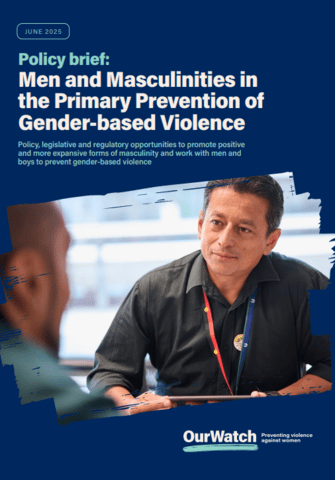
Policy report
Men and masculinities in the primary prevention of gender-based violence
Preventing gender-based violence requires requires work with men and boys, including challenging the stereotypes and cultures that underpin the drivers. This brief outlines policy, regulatory and legislative opportunities for promoting more positive and expansive forms of masculinity and working with men and boys to prevent gender-based violence.
Guide
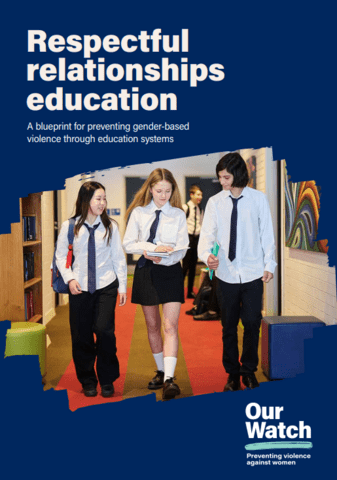
Respectful relationships education
Gender-based violence is a serious and pervasive issue in Australian schools. This blueprint provides a practical, evidence-based framework for governments on how to successfully implement, coordinate and monitor an evidenced-based approach to respectful relationships education. It identifies three key phases for education policy and decision makers to consider in implementing this approach.