

 SHARE
SHARE
Young people, online worlds and respectful relationships education: what the research tells us

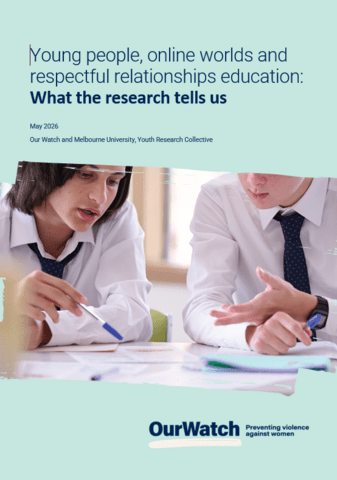
This research summary aims to inform the development of evidence-based teaching and learning materials that support children and young people to build respectful, equitable, inclusive and safe relationships across their life course. The paper is informed by a literature review. It examines young people’s experiences of sex, gender and relationships, both online and offline, and identifies educational approaches that support healthy relationships and the prevention of gender-based violence in the Australian context.
The report found young people are forming attitudes about gender, sex and relationships earlier than ever, while navigating growing risks in online environments. It highlights the urgent need for earlier, more comprehensive education that addresses the issues young people are facing today.
The research shows that attitudes towards gender equality and consent are formed early and reinforced through adolescence, making schools a critical setting for prevention. Importantly, the report highlights that young people themselves are calling for more relevant and honest education.
Key findings
- Young people begin forming romantic relationships as early as 10 to 13 years old, with sexual activity commonly beginning around age 15.
- Nearly 1 in 3 young people who have had sex report experiencing unwanted sex, with some first experiencing it before age 14.
- Young women, and transgender and non-binary young people are significantly more likely to experience unwanted sex and violence.
- Digital platforms are enabling new forms of abuse, including image-based abuse, coercive sexting and deepfake technologies.
- The growing influence of the online 'manosphere' is shaping harmful attitudes about masculinity, particularly among some boys and young men.
- Many young people are exposed to pornography early (average age 13.6), which can shape expectations around sex, consent and gender roles.
The report calls for:
- whole-of-school approaches to Respectful Relationships Education that reinforce equality and respect
- age-appropriate teaching and learning about topics such as gender stereotypes and healthy relationships, beginning in early years and continuing across all stages of a young person’s education
- stronger focus on consent as an ongoing, communicative practice
- integration of digital literacy, online safety and ethical behaviour
- open, inclusive, age-appropriate conversations about sex, relationships, power and pleasure.
