

Culturally and Linguistically Diverse (CALD)
Alternative labels
Culturally and linguistically diverse
Non-English speaking background
NESB
Report
Bright futures: Spotlight on the wellbeing of young people from refugee and migrant backgrounds
This report looks at how emerging trends like an increasingly competitive job and education market, growth in digital technology, globalisation and an increasingly culturally diverse society impacts young people from refugee and migrant backgrounds.
Briefing paper
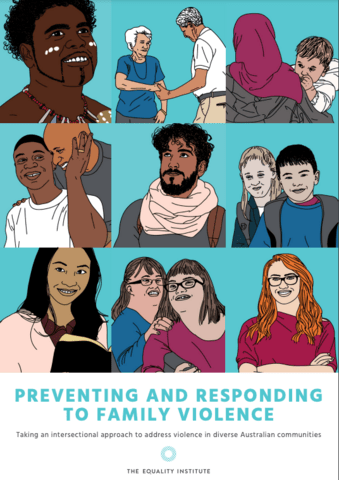
Preventing and responding to family violence: Taking an intersectional approach to address violence in diverse Australian communities
This brief provides a summary of the current evidence on the intersections of the different factors that underpin family violence among different communities or cohorts in Australia.

Report
Temporary migration and family violence: an analysis of victimisation, support and vulnerability
The aim of this project was to undertake a comprehensive review of family violence cases managed by inTouch that involve women (victims) who have or are experiencing family violence whose migration status is temporary.
Report
School experiences, career guidance, and the university participation of young people from three equity groups in Australia
Abstract Career guidance and positive secondary school experiences have a significant bearing on equity students’ propensity to enrol in tertiary education. This report provides new, contemporary Australian evidence on the interrelations between equity group membership, school experiences and university enrolment in young people from advantaged and disadvantaged social strata. Background
Discussion paper
Our stories, our voices: culturally diverse consumer perspectives on the role of accredited interpreters in Victoria’s health services
In 2016, the Ethnic Communities’ Council of Victoria (ECCV) Policy Advisory Committee on Health and Wellbeing (PACHW) discussed increasing concerns by health services and multicultural advocates regarding the low levels of awareness among culturally diverse communities about the role and engagement of accredited interpreters.